

Table of Contents
- Why Wholesale Purchasing Is Different
- Understanding Common Plastic Bottle Sizes
- Choosing the Right Material
- Bottle Colors and Their Functions
- How to Evaluate a Wholesale Supplier
- Factors That Affect Total Purchasing Cost
- Common Buying Mistakes
- Buyer's Checklist
- FAQ
Buying Plastic Bottles Wholesale Is About More Than Finding the Lowest Price
If you're sourcing plastic bottles for food, dietary supplements, pharmaceuticals, cosmetics, household chemicals, or industrial products, choosing the right supplier involves far more than comparing prices.
A bottle is only one component of your packaging, but it directly affects product protection, filling efficiency, transportation costs, regulatory compliance, and customer experience. Selecting the wrong bottle can lead to leaking packages, damaged products during shipping, unnecessary inventory costs, or delays caused by incompatible closures and sealing systems.
This is why experienced buyers rarely make purchasing decisions based solely on unit price. Instead, they evaluate the complete packaging solution, including bottle material, capacity, neck finish, closure compatibility, manufacturing consistency, and long-term supply reliability.
Whether you're placing your first order or reviewing existing suppliers, understanding the fundamentals of wholesale bottle purchasing can help reduce risk and improve purchasing efficiency.
Why Buying Plastic Bottles Wholesale Is Different from Retail Purchasing
Wholesale purchasing follows a completely different process from ordering small quantities online.
Retail purchases are typically designed for immediate use, with fixed product specifications, small order quantities, and little opportunity for customization.
Wholesale purchasing, on the other hand, requires buyers to consider production planning, inventory management, logistics, packaging compatibility, and future demand.
Before requesting quotations, buyers should evaluate several important factors.
Minimum Order Quantity (MOQ)
Most manufacturers establish minimum order quantities based on production efficiency rather than sales strategy.
Running production equipment for only a few hundred bottles is generally inefficient because setup time, mold installation, color changes, and quality inspections require nearly the same effort regardless of order size.
For buyers, understanding MOQ early helps avoid unrealistic sourcing expectations and makes supplier comparisons more meaningful.
Lead Time Matters as Much as Price
A lower unit price may not be beneficial if production requires several additional weeks.
When evaluating suppliers, buyers should ask questions such as:
- How long does standard production take?
- Is safety stock available?
- What happens during peak seasons?
- Can urgent orders be accommodated?
- Are customized colors or printing likely to extend production time?
Reliable delivery schedules often provide greater long-term value than marginal cost savings.
Packaging Compatibility Should Never Be Overlooked
One of the most common purchasing mistakes is focusing exclusively on the bottle itself.
In reality, buyers should evaluate the complete packaging system, including:
- Bottle
- Cap
- Induction seal
- Pressure-sensitive liner
- Shrink band
- Label dimensions
- Carton packaging
Even a perfectly manufactured bottle becomes problematic if the selected cap does not achieve the required sealing performance.
Considering compatibility during the purchasing stage can prevent expensive adjustments after production begins.


Total Cost Is More Important Than Unit Price
Professional buyers typically evaluate the total landed cost rather than the bottle price alone.
Additional expenses may include:
| Cost Factor | Typical Consideration |
|---|---|
| Ocean freight | Shipping distance and container utilization |
| Air freight | Emergency replenishment costs |
| Import duties | Country-specific regulations |
| Packaging materials | Cartons, pallets, protective packaging |
| Quality inspections | Third-party verification before shipment |
| Warehousing | Inventory carrying costs |
In many cases, transportation and inventory expenses have a greater impact on overall purchasing costs than minor differences in bottle pricing.
Choosing the Right Plastic Bottle Size
Bottle capacity influences far more than product volume.
It affects shelf appearance, filling efficiency, shipping weight, customer perception, and even purchasing behavior.
Selecting the appropriate size begins with understanding the intended application rather than simply matching product volume.
4 oz Plastic Bottles Wholesale
The keyword 4 oz plastic bottles wholesale is commonly associated with products that require portability and controlled dispensing.
Typical applications include:
- Dietary supplements
- Vitamins
- Capsules
- Gummies
- Personal care products
- Travel-sized cosmetics
- Sample packaging
For wholesale buyers, selecting a 4 oz bottle also requires attention to neck finish, closure style, and labeling area.
Many manufacturers offer these bottles in both PET and HDPE, allowing buyers to balance transparency, chemical resistance, and appearance according to product requirements.
When evaluating 4 oz plastic bottles wholesale, buyers should also confirm whether matching closures, induction liners, and shrink bands are readily available.
4 oz Plastic Bottles with Lids Bulk
Many procurement teams search specifically for 4 oz plastic bottles with lids bulk because sourcing bottles and closures separately can introduce compatibility risks.
Purchasing complete bottle-and-cap assemblies offers several advantages:
- Simplified purchasing
- Improved closure compatibility
- Reduced inventory complexity
- Faster production scheduling
- Lower assembly error rates
Before confirming an order, buyers should verify:
- Thread specifications
- Cap torque requirements
- Liner options
- Leak resistance
- Tamper-evident features
These details become increasingly important for food, pharmaceutical, and nutritional products.
8 oz Plastic Bottles Wholesale
The demand for 8 oz plastic bottles wholesale continues to grow across multiple industries because this size provides a balance between portability and usable capacity.
Common applications include:
- Protein powder samples
- Nutritional supplements
- Sauces
- Honey
- Syrups
- Household cleaners
- Pet care products
Compared with smaller containers, 8 oz bottles generally provide:
| Advantage | Benefit |
|---|---|
| Larger label area | Better product branding |
| Higher filling efficiency | Faster production |
| Better shelf visibility | Improved retail presentation |
| Lower packaging-to-product ratio | More efficient material usage |
Choosing between round, square, or wide-mouth designs depends on the product's viscosity, filling equipment, and consumer usage.
Empty Plastic Bottles Wholesale
The search term empty plastic bottles wholesale covers a broad range of packaging requirements across many industries.
Rather than focusing solely on bottle volume, buyers should consider several technical specifications before placing an order:
- Bottle capacity
- Neck finish
- Resin type
- Wall thickness
- Weight
- Color
- Filling temperature
- Closure compatibility
These characteristics determine whether a bottle is suitable for its intended application and production process.
Experienced procurement teams often begin by defining these specifications before contacting suppliers, making quotation comparisons more accurate and efficient.
Selecting the Right Bottle Shape
Bottle shape influences more than appearance. It affects storage efficiency, shipping costs, production speed, labeling, and user experience.
The most common options include:
| Bottle Style | Typical Applications | Advantages |
|---|---|---|
| Round Bottles | Supplements, pharmaceuticals, food | Easy to manufacture, label, and transport |
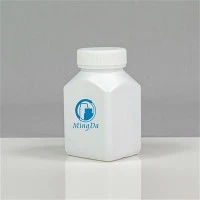
| Square Bottles | Vitamins, powders, household products | Better space utilization during shipping |
| Wide-Mouth Bottles | Gummies, powders, capsules | Easier filling and product access |
| Boston Round Bottles | Personal care, chemicals | Classic appearance and versatile design |
| Squeeze Bottles | Sauces, condiments, lotions | Controlled dispensing |
The ideal bottle shape should align with the product's characteristics, the filling line, and the end user's expectations rather than being chosen solely for aesthetics.
Part 2: PET Vs. HDPE: Which Material Is Right For Your Product?