



Closures
Mingda: Your Professional Closures Manufacturer!
Mingda Plastic Products Co., Ltd. is a comprehensive manufacturer of medical and food plastic packaging containers specializing in design, development, production and sales. Our products are specialized in packaging containers for food, pharmaceutical and healthcare applications, supplements and cosmetics.
Excellent R&D Team
The company has a R&D team of 20 people and a technical team of 50 people. We conduct strict supervision and control from product design, mold making, packaging solutions and logistics transportation.
Customizable
We have 8 years of production experience, and all products can be customized OEM and ODM.
Quality Assurance
Our products have obtained ROSH, CE, BV, SGS, REACH and other certificates.
Advanced Instruments
The company has 172 sets of production equipment, 10,000-level inspection rooms and professional testing equipment.


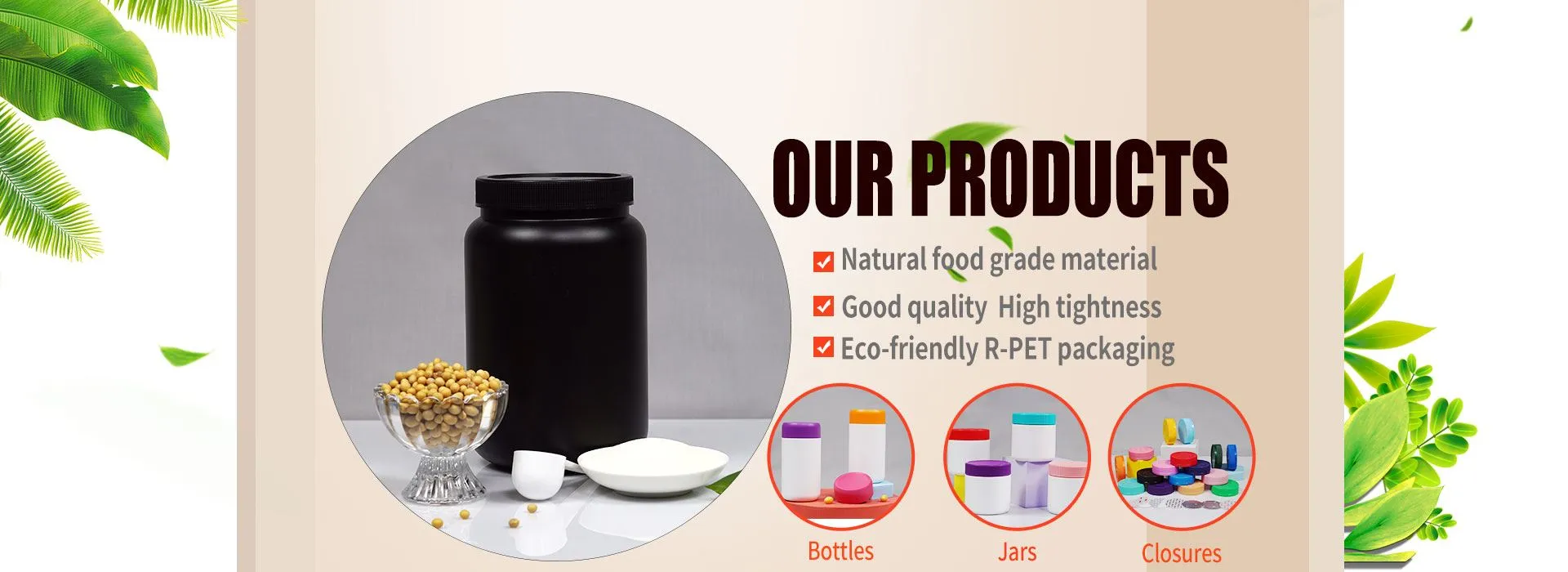
A Closures are a small disc-shaped metal or plastic cap that covers the opening of a bottle to prevent the contents from spilling or becoming contaminated. It is designed to seal tightly around the bottle neck and can be removed manually or with the help of an opener. Bottle caps are used on a variety of beverage bottles, including soft drinks, beer, wine and water bottles.
Features of Closures
Good Sealing
The primary function of a Closures are to create a tight seal that prevents the contents of the bottle from spilling or leaking. This is accomplished by using a rubber or plastic seal that lines the inside of the bottle cap and creates a tight barrier when the cap is screwed onto the bottle.
Thread Design
Closures usually have a threaded design that allows them to be screwed onto the bottle. Depending on the type of bottle and cap, the size and shape of the threads may vary, but they are generally designed to create a secure and airtight seal.
Anti-Tamper Function
Closures are tamper-evident, clearly indicating whether the bottle has been opened or unsealed. This could include tear-off plastic straps, plastic rings that break when the lid is twisted, or other similar mechanisms.
Child Safety Features
The Closures has a child-safe feature, making it difficult for young children to open the bottle. This can include push-and-turn mechanisms or other locking features that require a lot of force or dexterity to open.
Types of Closures
Standard Screw Cap: Standard screw caps and caps are the most familiar types, although there are many variations. The main purpose of these simple caps is to allow the user to unscrew and pour out liquid before tightening again. Screw caps are typically made from plastic or aluminum and can hold a range of products, from soft drinks to honey jars, vials of vials to large chemical drums.
Child Proof Caps: For potentially hazardous products such as pharmaceuticals, chemical cleaning products and motor oils, the screw cap's safety mechanism prevents children from opening the bottle. To open it safely, you need to push down and twist the lid or squeeze the sides. Of course, your automatic capping machine must be able to handle this type of capping.
Flip Top Caps: Another screw cap variation is the flip cap, often used on squeezable containers that are stored with the lid down. Some products that use this type of lid include shampoo, toothpaste, and sauces. The lid has a small hole in the center to allow product flow and a flip-top lid that closes to keep contents fresh.
Pan Top/Top Cover: Disc lids are very similar to flip lids, but you press the disc on one side of the lid and the other side pops up, revealing a hole for product release. Disc tops are commonly found on shampoos, face creams, sunscreens and other personal care products, in part because they are easy to open with wet or greasy hands.
Sports Caps/Push-Pull Cap: The sports cap is a variation of the screw cap with an upward shaped spout that opens and releases the product when pulled. They're common in sports drinks because you can hold the spout between your teeth while jogging or biking. Most include a protective plastic cap to cover the nozzle.
Spray Cap: A spray cap or nozzle, also known as an atomizer, is a common accessory found in perfume bottles. You simply press the cap with your finger and the product appears as a fine mist or spray. Most spray caps are plastic, but luxury ones are available with metal caps.
Pump Caps: The pump cover contains a dispenser that dispenses liquid or cream when pressed, and twists the pump to lock it in place. They are popular in hand sanitizers and disinfectants.
Beer Bottle/Crown Cap: sitting for too long, heavy objects are pressed for a long time,pat the surface of the leather cloth with your hands and stretch on both sides
Twist Top Cap: Twist top caps are usually conical in shape with a hole in the top that allows product to flow when you twist the nozzle to open the hole. Twisting is common in sauces, especially mustard.
Ropp Bottle Cap: ROPP caps are suitable for products where tampering may be an issue, such as spirits and liqueurs, and provide an airtight seal for sparkling wines. With this system, a capping machine presses a blank aluminum cap onto the bottle's threaded neck to create a tamper-proof seal.
Cork: Cork-stopped bottles are common, especially among wine connoisseurs. Capping machines are made of cork or plastic and use pressure to push the cork into the bottle to create a tight seal. For most products, the machine puts a plastic shrink wrap sleeve over the neck and top of the bottle.
Dropper Cap: Dropper caps are used for medications, eye drops, ear drops, and essential oils and include a glass or plastic dropper that extends down into the bottle. The lid has a bulb that the user squeezes to dispense the product.
Materials of Closures
Plastic
This is the most common bottle cap material. Plastic lids are made from several types of plastic, such as polyethylene, polypropylene, and PET (polyethylene terephthalate). They are lightweight, durable and easy to mold into different shapes and sizes. They can also be easily recycled.
Aluminum
Aluminum bottle caps are also common. They are lightweight, strong and easy to recycle. They can also be coated with various materials, such as epoxy or varnish, to protect the bottle's contents.
Polypropylene (PP)
PP is a thermoplastic polymer commonly used in bottle cap manufacturing. It has good wear resistance, is lightweight, and can withstand high temperatures. PP bottle caps are also recyclable, making them an environmentally friendly choice.
Glass
Glass bottle caps are most commonly used for beer and soda bottles. They are usually made of tempered glass, which is stronger than regular glass. The glass lid provides a tight seal to keep the carbonation in the bottle.
Metal
Metal bottle caps are also used on beer and soda bottles. They are usually made of tinned steel or aluminum. Metal lids are durable and easy to recycle.
High Density Polyethylene (HDPE)
HDPE is another plastic commonly used to make bottle caps. It is ideal for use in food and beverage packaging as it is resistant to chemicals and moisture. HDPE is also recyclable and lightweight, making it an environmentally friendly material choice.
Process of Closures

Material Preparation
The first step in making a bottle cap is to prepare the material, usually a granular plastic resin. The material is loaded into a hopper and then fed into the machine to heat it to a temperature suitable for molding.

Injection Molding
The second step is injection molding, where the plastic resin is melted and injected into the mold. Molds are usually made of metal and are designed to produce bottle caps of the desired shape and size.
Cool Down
After the plastic is injected into the mold, it needs to be cooled and solidified. The process is typically accomplished by circulating cooling water through the mold, which helps cool the plastic quickly and allow it to solidify.

Push Out
After the plastic cools and solidifies, the mold is opened and the bottle cap is ejected. This is usually done by using an ejector pin to push the cap out of the mold.

Trimming and Finishing
After the bottle cap is ejected from the mold, it needs to be trimmed and finished. Trimming involves removing any excess plastic that may be around the edge of the lid, while finishing involves adding any additional features or embossing that may be needed.

Quality Control
The final step in making bottle caps is quality control. This usually involves inspecting the lid for any imperfections or imperfections, such as cracks, warping, or uneven edges. Caps that do not meet the standards will be discarded, while caps that pass inspection will be packaged and sent to customers.
How to Choose Closures
Material
The material of the bottle cap is one of the key factors in selection. Three common bottle cap materials include: plastic, aluminum, and metal. Depending on the purpose of the bottle and the protection required, choose a cap material that matches it.
Shape and Size
Shape and size are also key factors in choosing a bottle cap. The diameter and depth of the bottle need to match the size and shape of the cap. Bottle caps can be round, square or other special shapes.
Sealing
The seal that protects the liquid or object inside the bottle is also a key factor in choosing a bottle cap. Bottle caps have different sealing capabilities. Some can provide a high degree of protection, while others may have minor leaks or deformation due to climate change.
Usage Environment
Choose the bottle cap according to the environment and usage scenario of the bottle cap. For outdoor use, you need a bottle cap that is durable, waterproof, and stain-resistant, while for indoor use, you need a bottle cap that is not easily damaged and looks good.
Selection of Color
The color of the bottle cap is also a very important factor. Sometimes specific bottle cap colors are needed to help differentiate between different types of items or different bottle caps. Moreover, color can be used as a form of brand recognition and promotion, and can also attract greater attention in the store.
Plastic Classification
If plastic bottle caps are used, they need to be selected according to material classification. PET bottle caps are suitable for carbonated drinks and other carbonated beverages, PP bottle caps are suitable for fruit products such as juices, sauces, and jams, and PE bottle caps are suitable for food, beverage and other industries.
Applications of Closures

Bottle Cap
Bottle caps are effective closures for various beverage and food containers. They help ensure contents are protected from contamination and spills, while remaining fresh for longer.

Crafts and DIY Projects
Bottle caps can be used in a variety of crafts and DIY projects, such as jewelry making, wall art, and sculptures. They can be painted, glued and molded into a variety of shapes to create unique and creative designs.

Clean and Polish
When connected to a drill bit, the cap can be used as a polishing tool for wheels, metal parts, and other surfaces. They can help remove dirt, grease and grime, leaving behind a polished and shiny surface.

Flowerpot
Bottle caps can be used as micro planters for small herbs and plants. They can be glued to a base surface or strung together to form a hanging planter. Bottle caps can also be used as plant markers to identify different plants in your garden.
Certificate

Frequently Asked Questions
Q: What is a Closures?
Q: How is a Closures used?
Q: What materials are commonly used to make Closures?
Q: Are all Closures the same size?
Q: What is the purpose of the ring pull on some Closures?
Q: Can Closures be recycled?
Q: How long does it take for a Closures to decompose in a landfill?
Q: What is the "twist-off" cap design?
Q: How are Closures made?
1. Load the raw materials used to make bottle caps (usually plastic resin pellets) into the hopper and feed them to the injection molding machine.
2. The material is heated and melted in the machine's barrel, which has a screw that feeds the molten plastic into the mold.
3. The mold consists of two halves, namely the cavity side and the core side. Molten plastic is injected into the cavity portion of the mold and forms the shape of the bottle cap.
4. Once the mold is filled, allow it to cool to allow the plastic to solidify. This is done with water, oil, or other cooling methods.
5. Once the lid has set, open the mold and pop out the newly formed lid.
6. The caps are then inspected for any defects such as cracks, deformations or inconsistencies.
7. The final step is to assemble the cap onto the bottle, this can be done using automated machinery or manually.
Q: Why do some Closures have a "child-proof" design?
Q: Are there any safety concerns with using Closures?
Q: What other items can be made using Closures?
2. Keychains
3. Magnets
4. Coasters
5. Mosaics or art pieces
6. Bottle cap flowers or other decorative objects
7. Lamps or other lighting fixtures
8. Miniature dollhouse furniture
9. Christmas ornaments
10. Game pieces or tokens for board games.
Q: Can Closures be used for arts and crafts projects?
Q: What is the most common size of bottle cap?
Q: Are there any unique or unusual Closures designs available?
Hubei Mingda Plastics Products Co., Ltd. is one of the most professional closures manufacturers and suppliers in China, specialized in providing high quality products with low price. If you're going to wholesale cheap closures in stock, welcome to get free sample from our factory. Also, customized service is available.
white plastic caps, plastic screw press cover caps, Ribbed Screw Cap