

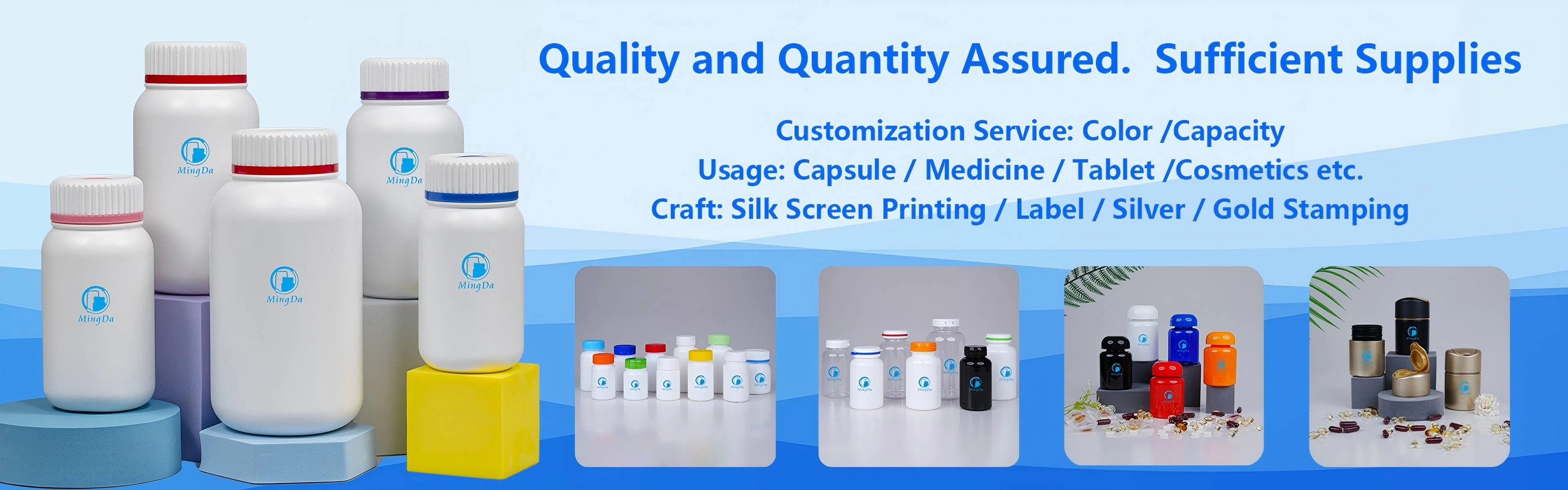
If you're sourcing packaging for food, dietary supplements, or pharmaceutical products, you've probably asked yourself one simple question: Are HDPE bottles actually safe?
I hear this question surprisingly often. Many buyers focus on bottle size, color, or price, but safety should always come first. After all, the packaging comes into direct contact with your product and plays an important role in protecting its quality throughout storage and transportation.
The good news is that HDPE bottles have earned the trust of manufacturers around the world. They're widely used for vitamins, capsules, tablets, protein powders, food products, and many over-the-counter medicines. However, choosing the right bottle involves more than simply selecting the material. Understanding how the bottle is made and who manufactures it is just as important.
In this article, I'll explain why food-grade HDPE bottles are widely accepted, what makes them suitable for food and pharmaceutical applications, and what I believe buyers should check before placing an order.


Why Are HDPE Bottles So Common in Food and Pharmaceutical Packaging?
HDPE (High-Density Polyethylene) has become one of the most widely used materials for HDPE packaging, and for good reason.
Compared with many other plastics, HDPE offers an excellent balance of durability, moisture resistance, chemical stability, and affordability. It also performs well during transportation because it resists impact better than glass and many rigid plastic alternatives.
These advantages make HDPE bottles a practical choice for products that need reliable protection throughout manufacturing, shipping, warehouse storage, and retail distribution.
For many brands, packaging isn't just about appearance-it's about protecting product quality until it reaches the customer.
Are HDPE Bottles Safe?
The short answer is yes-when they're made from food-contact compliant materials and manufactured under proper quality standards.
-
HDPE Is Widely Accepted for Food Contact
One reason food-grade HDPE bottles are so popular is that the material has a long history of use in food and pharmaceutical packaging.
You'll find HDPE used in containers for milk, nutritional supplements, dry foods, pharmaceuticals, and many everyday consumer products. Its chemical stability makes it suitable for storing a wide range of products without affecting their quality under normal conditions.
-
Are HDPE Bottles BPA-Free?
Many buyers specifically ask about BPA.
HDPE resin itself does not contain BPA. As a result, many supplement bottles and pharmaceutical bottles made from HDPE are marketed as BPA-free. However, I always recommend confirming the material specification with your supplier rather than making assumptions.
-
Does HDPE Release Harmful Chemicals?
Under normal storage and intended use, HDPE is considered a stable packaging material.
That said, no packaging material is suitable for every application. If your product contains aggressive solvents, highly reactive ingredients, or will be exposed to unusual temperatures, it's always worth carrying out a compatibility test before moving into mass production.
Which Products Are Best Suited for HDPE Bottles?
HDPE works particularly well for dry products that benefit from moisture protection and durable packaging.
| Product | Recommendation | Why HDPE Works Well |
|---|---|---|
| Dietary supplements | ★★★★★ | Excellent moisture protection and durability |
| Tablets | ★★★★★ | Widely used throughout the pharmaceutical industry |
| Capsules | ★★★★★ | Helps maintain product stability |
| Protein powders | ★★★★★ | Strong, lightweight, and easy to transport |
| Powdered foods | ★★★★★ | Good barrier against moisture |
| Candies | ★★★★☆ | Food-contact suitable and durable |
| Pet supplements | ★★★★★ | Excellent impact resistance during shipping |
If your product needs consumers to clearly see what's inside-such as beverages or cosmetic liquids-a PET bottle may be a better option. Packaging should always match both the product and the marketing strategy.


What Should Buyers Look for When Choosing HDPE Bottles?
From my experience, selecting the right supplier matters just as much as selecting the right material.
-
Make Sure Food-Grade Resin Is Used
Not every HDPE bottle is designed for food or pharmaceutical applications.
Always ask whether the manufacturer uses food-contact compliant raw materials and whether supporting documentation is available when needed.
-
Evaluate the Manufacturer's Quality Control
Reliable manufacturers don't simply produce bottles-they inspect them.
Look for companies that perform routine quality checks such as dimensional inspection, leak testing, seal verification, and drop testing. Consistent quality becomes especially important when you're purchasing large production volumes.
-
Pay Attention to the Production Environment
For pharmaceutical bottles and supplement bottles, the production environment can be just as important as the material itself.
A clean manufacturing environment, standardized operating procedures, and traceable quality systems all help reduce potential contamination risks.
-
Consider the Complete Packaging System
The bottle alone doesn't guarantee product protection.
The cap, sealing liner, induction seal, and filling process all contribute to the final packaging performance. Making sure these components work together can prevent leakage, moisture intrusion, and customer complaints later.
Frequently Asked Questions
Can HDPE bottles be used for food packaging?
Yes. Food-grade HDPE bottles are widely used for food products when they are manufactured using compliant raw materials and appropriate quality standards.
Are HDPE bottles suitable for pharmaceuticals?
Yes. Many tablets, capsules, and over-the-counter healthcare products are packaged in pharmaceutical bottles made from HDPE because of their durability and moisture resistance.
Are HDPE bottles BPA-free?
HDPE resin itself does not contain BPA. If BPA-free packaging is a requirement for your market, ask your supplier to confirm the material specification.
Can HDPE bottles be reused?
They can be reused for suitable applications if they remain clean and undamaged. However, for pharmaceutical and food products, many brands prefer new packaging to maintain consistent quality and hygiene.
Is HDPE better than PET?
Neither material is universally better. HDPE offers better chemical resistance and durability, while PET provides excellent transparency. The right choice depends on your product, storage conditions, and branding goals.
Final Thoughts
I don't think there's a single packaging material that's perfect for every product. However, for many food, supplement, and pharmaceutical applications, HDPE bottles remain one of the most reliable and widely accepted solutions available.
When evaluating HDPE packaging, I recommend looking beyond the bottle itself. Consider the raw materials, manufacturing standards, quality control, sealing system, and the supplier's ability to deliver consistent quality over time.
Choosing the right packaging isn't simply about finding the lowest price. It's about protecting your product, supporting your brand, and giving your customers confidence every time they open the bottle.