

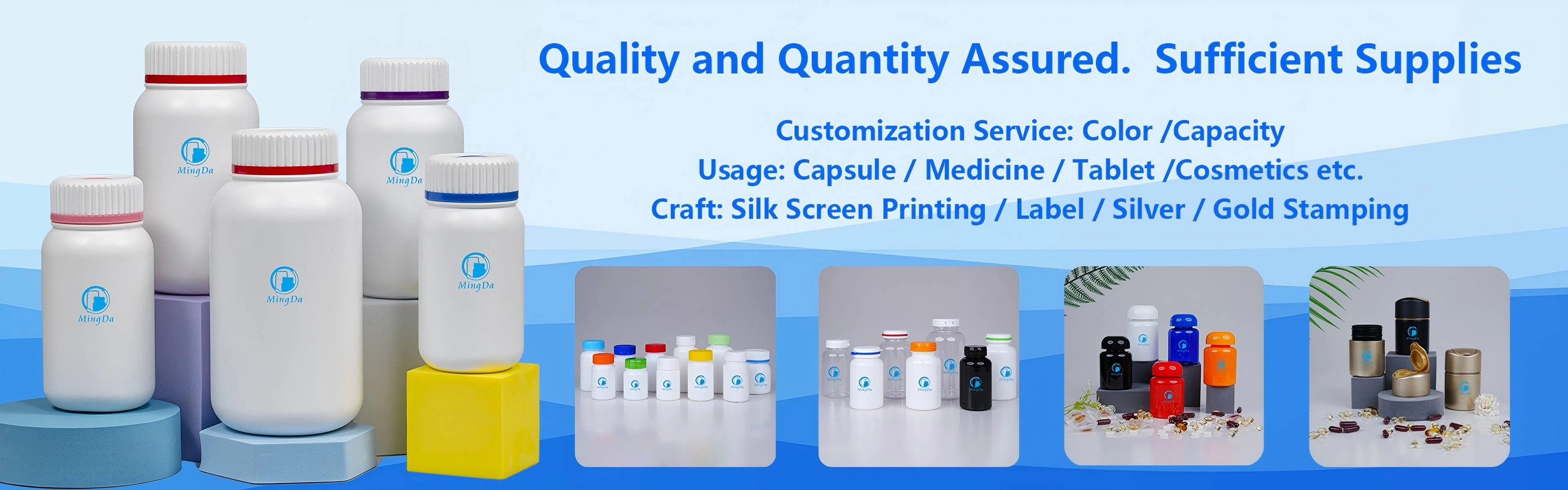


Selecting the right cap and closure system is just as important as choosing the bottle or jar itself. A well-matched closure improves sealing performance, protects product quality, and reduces risks during storage and transportation. This guide explains how to choose the appropriate caps, liners, and seals based on structure, material compatibility, functional needs, and purchasing considerations.
Cap & Closure Types
Screw Caps
Screw caps are the most widely used closures for plastic bottles and jars. They are suitable for powders, tablets, capsules, liquids, and granules, and allow repeated opening and closing.
Common options include standard PP screw caps, matte-finish caps, diamond-pattern caps, wheel-style caps, and metal-look caps. Screw caps provide stable torque control and consistent sealing, especially when combined with liners or aluminum foil seals. They are widely used in food, nutraceutical, pharmaceutical, and personal care packaging.


Flip-Top & Hinged Caps
Flip-top and hinged caps are designed for convenience and one-hand operation. These caps are commonly used for food products, cosmetics, and daily-use items.
Available structures include PP flip-top caps and rear-hinged caps. Some designs offer controlled dispensing to reduce spillage and help limit product contact, which can improve hygiene during repeated use.
Safety Caps / Child-Resistant Caps
Safety and child-resistant caps are mainly used for pharmaceuticals, nutraceuticals, and certain chemical products. These closures are designed to reduce the risk of accidental opening by children while remaining accessible for adults.
Typical options include PP safety caps, wheel-style safety caps, diamond safety caps, and smooth three-point safety caps. Most designs use push-and-turn or combined opening mechanisms while maintaining reliable sealing performance.


Double-Layer & Specialty Caps
Double-layer caps offer enhanced sealing performance and a more premium appearance. They are often selected for high-value or brand-focused products.
Common designs include clover-shaped PP double-layer caps, standard PP double caps, leaf-style double caps, and transparent PS double caps. These closures combine functional sealing with visual appeal, especially when used with wide-mouth containers.
Aluminum Foil Seals & Liners
Aluminum foil seals and liners play a critical role in product protection. Available options include standard aluminum foil, pressure-sensitive liners, heat induction liners, printed one-piece foil seals, easy-peel foil seals, and FS5-8 aluminum foil.
These sealing materials help block air, moisture, and dust, while also providing tamper evidence and contamination protection. Aluminum foil seals are commonly used for food, supplements, and pharmaceutical packaging where product safety is a priority.


Matching Caps with Bottle & Jar Materials
Closures for HDPE Bottles
HDPE bottles are known for their strength, chemical resistance, and temperature tolerance. They are commonly paired with PP or HDPE caps and aluminum foil seals.
This combination is suitable for protein powders, tablets, capsules, and liquid supplements. Proper cap selection helps maintain structural stability and long-term sealing performance.


Closures for PET Jars
PET jars offer high transparency and strong shelf display value. They are widely used for food, supplements, and cosmetic products.
PET containers are typically matched with PP or LDPE caps and aluminum foil seals to ensure reliable sealing while preserving visual clarity.


Material Compatibility
Material compatibility between the bottle, cap, and sealing liner is essential. Incompatible materials may cause deformation, leakage, or long-term performance issues.
Pre-production compatibility testing is recommended to confirm that all components work together under real storage and transportation conditions.
Functional Requirements
Leak Prevention
Leak prevention is one of the most critical functions of any closure system, especially for liquids, semi-liquids, and fine powders. Effective sealing depends on the combination of cap design, neck finish, and sealing liner rather than the cap alone.
Common solutions include screw caps combined with heat induction foil or hot-melt liners, deeper-thread caps for wide-mouth containers, and aluminum foil seals for products exposed to vibration or inversion during transport. Leak, vacuum, drop, and vibration tests should be conducted before shipment to verify overall sealing performance.
Contamination Protection
For food, nutraceutical, and pharmaceutical products, contamination control is essential. Closure systems should minimize exposure to air, dust, and direct hand contact.
Aluminum foil seals provide a hygienic barrier before first opening, while flip-top or hinged caps help reduce repeated contact during use. Integrated liners further protect against moisture and fine particles, helping extend shelf life.
Tamper Evidence & First-Open Indication
Tamper evidence is especially important for health-related and high-value products. Aluminum foil seals, easy-peel liners, and pressure-sensitive liners clearly indicate first opening and prevent unnoticed re-opening.
Dual-seal systems combining foil seals and screw caps offer an additional layer of security, enhancing consumer trust and reducing distribution disputes.

Purchasing Recommendations
Specification & Fit Confirmation
Before purchasing caps and sealing systems, key specifications should be clearly defined, including neck diameter, thread finish, cap height, thread engagement, and liner size.
Even containers with the same nominal diameter may use different thread standards. Final confirmation using physical samples or technical drawings is strongly recommended.
Sampling & Sealing Validation
Sampling and testing before mass production are essential for risk control. Recommended tests include leak testing in upright and inverted positions, drop testing to simulate handling, vibration testing for logistics conditions, and high- and low-temperature testing to verify material stability.
Early validation helps identify potential mismatches and prevents costly rework or product loss.
Regulatory & Certification Compliance
Packaging requirements vary by market. Caps and sealing materials should meet applicable food-grade standards, FDA or equivalent regulations, and ISO-related quality management requirements.
Confirming compliance in advance helps ensure smooth customs clearance and reliable market access.