

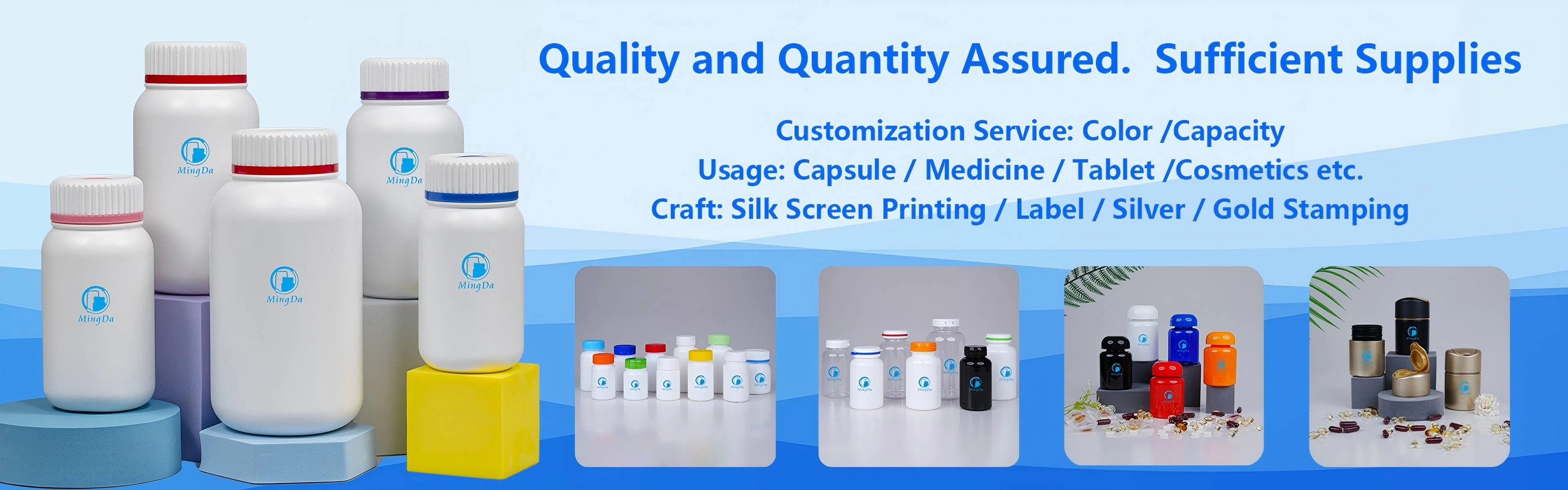


When sourcing plastic bottles and jars, surface appearance is rarely the real issue. Most quality problems show up later-during filling, transportation, storage, or after the product has already reached the end customer. Cracks, deformation, leakage, or chemical interaction are usually the result of overlooked details earlier in the supply chain.
Below is a practical guide to evaluating and maintaining quality in plastic bottles and jars, based on real production and logistics considerations rather than theoretical standards.
Key Quality Control Factors
Material Certification (HDPE & PET)
Quality control starts with the resin, not the finished container. For HDPE and PET bottles and jars, the resin grade must match the intended application.
In practice, this means confirming:
- The material is virgin, food-grade or pharmaceutical-grade, not blended with unknown recycled content
- The supplier can provide consistent documentation, such as FDA compliance statements or ISO-based quality records
- Resin sourcing remains stable across production batches
HDPE should demonstrate good impact resistance and resistance to environmental stress cracking, especially for heavier fills. PET should maintain high clarity, low haze, and consistent mechanical strength. These properties directly affect sealing performance and long-term durability.


Wall Thickness Consistency
Wall thickness is one of the most reliable indicators of real manufacturing quality. Even bottles that look identical can perform very differently if wall distribution is uneven.
Common issues caused by poor wall thickness control include:
- Thin sections that crack during drop or compression
- Thick sections that increase cost without improving strength
- Uneven stress distribution at the shoulder, base, or neck
Consistent wall thickness requires stable mold design and controlled blow molding or injection processes. This is especially important for large-volume orders, where small variations can lead to high defect rates over time.
Closure and Sealing Integrity
Caps, liners, and bottle necks should always be evaluated as a complete sealing system, not as separate components.
Key points to verify include:
- Accurate neck finish dimensions to ensure proper cap fit
- Consistent opening torque that prevents both loosening and over-tightening
- Liner performance after transportation and stacking
A properly designed closure system should remain leak-free after long-distance shipping and repeated handling, without compromising ease of opening for end users.

On-Site Inspection Recommendations
Sample Testing
Before full-scale production, sample testing helps identify risks that are not visible in drawings or specifications.
Beyond appearance checks, samples should be evaluated for:
- Dimensional accuracy
- Structural consistency at stress points such as the shoulder and base
- Stability after actual filling
Early sample validation often prevents costly corrections at the mass production stage.
Drop and Compression Testing
Drop and compression tests simulate real logistics conditions rather than ideal laboratory scenarios.
Typical evaluations include:
- Dropping filled containers from defined heights at multiple angles
- Applying vertical load to simulate pallet stacking
- Checking for cracks, deformation, or seal failure
These tests provide a realistic view of how the container will perform throughout transportation and warehousing.


Chemical Compatibility Testing
For containers used in chemical, nutraceutical, or functional product applications, material compatibility is critical.
Testing should confirm:
- No chemical reaction between the container and the contents
- No odor absorption or material migration
- No long-term degradation such as discoloration or brittleness
Ignoring compatibility risks can result in product recalls and long-term brand damage.
Transportation and Storage Considerations
Proper Stacking Guidelines
Stacking methods should match the container's structural design and material strength.
Excessive stacking pressure can deform bottles or compromise seals, even if the product passes initial inspections. Clear stacking limits reduce losses during transportation and storage.
Temperature and Humidity Control
Plastic containers are sensitive to environmental conditions.
High temperatures can soften certain plastics, while low temperatures may increase brittleness. Excess humidity may also affect liner performance. Stable storage conditions help maintain dimensional stability and sealing reliability.


Deformation Prevention
Appropriate outer packaging, internal supports, and spacing materials help minimize friction and compression during transit. These measures are especially important for long-distance or cross-border shipments.
Long-Term Partnership Strategies
Supplier Qualifications
Reliable quality over time depends on supplier capability, not isolated production samples.
Suppliers with established quality management systems, in-house testing capabilities, and standardized production controls are more likely to maintain consistency across orders.
Batch Control and Monitoring
Quality should be monitored continuously, not only during the first production run.
Regular batch sampling and documented inspection records help identify deviations early, preventing small issues from becoming systemic problems.
Quality Response and Rework Mechanisms
Even with strict controls, occasional quality issues can occur.
Clear procedures for feedback, corrective action, and rework demonstrate a supplier's commitment to long-term cooperation rather than short-term delivery.