

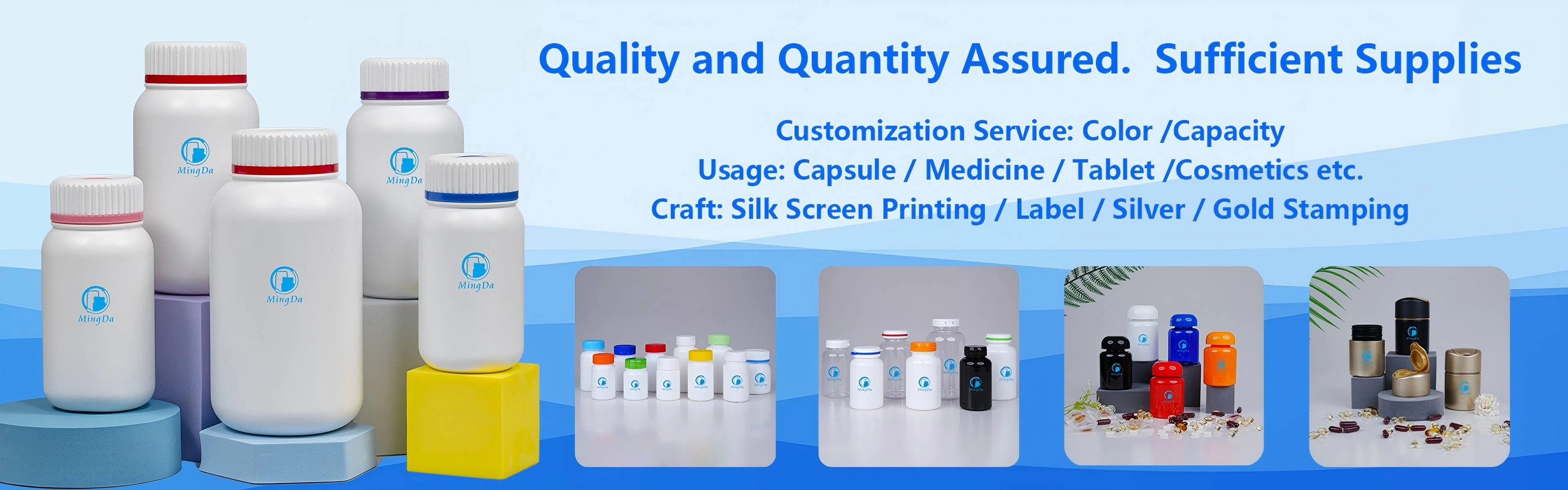
Why Do Pharmaceutical Companies Choose HDPE Bottles?
If you look closely at pharmaceutical packaging, you will notice a very common combination: HDPE bottles, screw caps, and sealing systems.
From tablets and capsules to powders, vitamins, and dietary supplements, HDPE has remained one of the most widely used packaging materials in the healthcare industry.
When I first started learning about plastic packaging, I had the same question many buyers ask:
"Would transparent packaging be a better choice?"
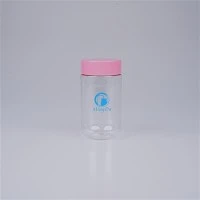
Transparent bottles often look more premium because consumers can directly see the product inside. They also provide stronger shelf appeal.
However, after working with more pharmaceutical and supplement packaging projects, I realized that appearance is rarely the most important factor when selecting packaging materials.
Pharmaceutical products need packaging that can maintain stability throughout the entire supply chain. The bottle needs to protect the product during filling, transportation, storage, and long-term use.
This is the real reason why HDPE bottles continue to play an important role in pharmaceutical packaging.
HDPE is not popular because it has only one outstanding advantage. It remains widely used because it provides a strong balance between moisture protection, durability, safety, production efficiency, and cost control.
Pharmaceutical Companies Choose HDPE for More Than Just Cost
When purchasing pharmaceutical packaging, price is always an important consideration.
However, I don't think it is accurate to say that companies choose HDPE simply because it is affordable.
From my experience with packaging projects, pharmaceutical companies usually care more about long-term reliability.
A batch of pharmaceutical bottles may go through:
- Automated filling;
- High-speed capping;
- Long-distance transportation;
- Warehouse storage;
- Multiple handling processes;
- Final retail distribution.
Any weakness during these stages can affect the final product quality.
For example:
If bottle strength is insufficient, the container may deform during transportation.
If moisture protection is not adequate, tablets or capsules may be affected by humidity.
If bottle neck dimensions are inconsistent, sealing performance may become unstable.
The cost caused by these problems is often much higher than the original difference in bottle price.
That is why I believe pharmaceutical companies choose HDPE not only because of material cost, but because it provides a mature, stable, and predictable packaging solution.
Why HDPE Is Suitable for Tablet and Capsule Packaging
In pharmaceutical packaging, tablets and capsules are among the most common applications for HDPE pharmaceutical bottles.
The reason is simple:
Many solid dosage products require strong protection against environmental factors.
Moisture is one of the biggest concerns for many tablets and capsules. Long-term exposure to humidity may cause:
- Tablets absorbing moisture;
- Capsules becoming softer;
- Powder products forming lumps;
- Changes in product appearance.
HDPE naturally provides good moisture resistance, helping reduce the risk of external moisture entering the container.
However, effective pharmaceutical protection does not rely only on the bottle material.
In real applications, HDPE bottles are often combined with:
- Induction foil seals;
- Desiccants;
- Moisture-resistant liners;
- Proper closure designs.
These components work together to create a complete protection system.
Don't Only Ask "Is It HDPE?"
This is one point I believe many buyers overlook.
Two products may both be called HDPE bottles, but their actual performance can be very different depending on the supplier's manufacturing capability.
Several factors influence pharmaceutical packaging quality:
| Factor | Impact on Purchasing Decision |
|---|---|
| HDPE resin quality | Affects bottle stability and safety |
| Blow molding control | Influences weight, wall thickness, and consistency |
| Mold accuracy | Determines bottle dimensions and assembly performance |
| Sealing tests | Reduces transportation risks |
| Production environment | Supports pharmaceutical packaging requirements |
When sourcing HDPE packaging, the material name is only the starting point.
The more important question is how the supplier controls quality throughout the manufacturing process.
Why Do Many Pharmaceutical Brands Choose HDPE Instead of Transparent PET?
This is a common question during packaging selection.
PET bottles have clear advantages:
- High transparency;
- Attractive appearance;
- Strong shelf visibility.
For beverages, cosmetics, and certain food applications, PET can be an excellent choice.
However, pharmaceutical packaging has different priorities.
Compared with visual presentation, many pharmaceutical companies focus more on:
- Moisture protection;
- Chemical stability;
- Transportation safety;
- Long-term storage performance.
HDPE provides a more balanced performance for these requirements.
| Comparison | HDPE Bottles | PET Bottles |
|---|---|---|
| Transparency | Usually opaque or semi-transparent | Highly transparent |
| Moisture resistance | Excellent | Good |
| Impact resistance | Excellent | Good |
| Chemical resistance | Excellent | Good |
| Appearance | More functional | More visually attractive |
| Common applications | Pharmaceuticals, supplements, chemicals | Beverages, food, cosmetics |
My recommendation is simple:
Do not choose packaging materials only based on appearance.
The better choice depends on the product characteristics, storage conditions, and target market.


How HDPE Bottles Influence Pharmaceutical Production Efficiency
Many buyers focus only on the final bottle appearance and rarely consider what happens after the packaging arrives at the factory.
However, pharmaceutical manufacturers need packaging that works smoothly with their production lines.
Modern pharmaceutical production often uses automated systems for:
- Bottle feeding;
- Filling;
- Capping;
- Inspection;
- Packaging.
If bottle dimensions are inconsistent, production efficiency can be affected.
For example:
Incorrect neck dimensions may influence cap performance.
Different bottle heights may affect equipment operation.
Weight variations may increase packaging costs.
A reliable HDPE bottle supplier does not only provide a visually acceptable product. The supplier needs to maintain consistency across large production volumes.
What Do I Look For When Selecting an HDPE Pharmaceutical Bottle Supplier?
If I were selecting an HDPE pharmaceutical bottle supplier, I would not compare prices only.
I would focus on several key areas:
| Evaluation Area | Why It Matters |
|---|---|
| Pharmaceutical packaging experience | Shows understanding of industry requirements |
| Stable production capacity | Supports long-term supply |
| Quality inspection system | Reduces batch risks |
| Customization capability | Supports different brand requirements |
| Export experience | Helps meet different market expectations |
For long-term cooperation, supply stability is usually more valuable than a small price difference.
Why HDPE Will Continue to Be Competitive in Pharmaceutical Packaging
The plastic packaging industry continues to develop, and new materials are constantly entering the market.
However, I believe HDPE will remain an important material for pharmaceutical packaging.
The reason is straightforward:
It solves the problems pharmaceutical companies care about most.
Not only appearance.
But protection.
Not only short-term cost.
But long-term reliability.
For pharmaceutical and supplement manufacturers producing at scale, a mature, reliable, and easily scalable packaging material creates real business value.
Final Thoughts
HDPE remains widely used in pharmaceutical packaging not because it has the most attractive appearance or simply because it offers cost advantages.
Its long-term success comes from a combination of:
- Good moisture protection;
- Excellent impact resistance;
- Stable chemical performance;
- Mature manufacturing processes;
- Cost-effective large-scale production.
When choosing HDPE pharmaceutical bottles, I recommend looking beyond the material itself and evaluating the complete packaging system:
Is the bottle consistent?
Is the sealing solution reliable?
Does the supplier have stable production and delivery capability?
For pharmaceutical packaging, a good bottle does more than protect the product inside. It also protects the brand reputation behind it.