

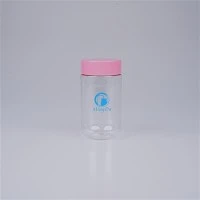
Introduction: Recycling Medication Bottles Is More Complicated Than Regular Plastic Packaging
If you look at today's pharmaceutical packaging market, you will notice that plastic containers remain one of the most common choices for medicines, vitamins, and dietary supplements. Among them, HDPE bottles are widely used because of their durability, moisture resistance, and reliable performance.
As sustainability becomes increasingly important worldwide, more buyers are asking questions such as:
- Are plastic medication bottles recyclable?
- Do pharmaceutical packages meet environmental requirements?
- Can recyclable materials still provide enough protection for sensitive products?
When I first started learning about plastic packaging, I also thought recyclability mainly depended on the material itself. For example, HDPE belongs to plastic recycling code #2, so I assumed that any HDPE bottle could easily enter the recycling system.
However, after working with more pharmaceutical and supplement packaging projects, I realized the reality is more complex.
Whether a medication bottle can truly be recycled depends not only on the plastic material, but also on:
- Packaging design;
- Bottle components;
- Local recycling infrastructure;
- Product residue requirements;
- Regional regulations.
Therefore, when selecting pharmaceutical bottles, buyers should not only ask:
"Is this bottle recyclable?"
A better question is:
"Does this packaging solution support the sustainability goals of my target market?"
Plastic Medication Bottles Can Be Recycled, but Several Factors Matter
Plastic is widely used for pharmaceutical packaging because it provides several practical advantages:
- Lightweight structure;
- Lower transportation costs;
- Strong impact resistance;
- Efficient large-scale production;
- Reliable product protection.
Among different plastic materials, HDPE bottles and PET bottles are commonly used in healthcare packaging.
In general, HDPE bottles are considered recyclable.
HDPE belongs to:
Resin Identification Code #2
This means that in regions with established recycling systems, HDPE can be collected, sorted, and processed into new plastic products.
Recycled HDPE can be used for applications such as:
- Industrial containers;
- Plastic pipes;
- Household products;
- Plastic sheets.
However, one point I believe buyers should understand is:
A recyclable material does not always mean every bottle will actually be recycled.
Why Is Recycling Pharmaceutical Bottles More Complex?
Compared with ordinary beverage bottles, pharmaceutical packaging usually contains more components.
A typical medication bottle may include:
- HDPE bottle body;
- PP cap;
- Induction foil seal;
- Label;
- Moisture protection components;
- Desiccants.
These different materials can affect the efficiency of recycling processes.
For example, an HDPE medication bottle may be recyclable, but certain labels, adhesives, or mixed-material components can make recycling more difficult.
This is why more brands are focusing on:
Design for Recycling.
The idea is not simply choosing recyclable materials. It is designing packaging that can be processed more efficiently after use.
My View: Sustainable Packaging Is More Than Choosing a "Green Material"
During many packaging discussions, I often hear buyers ask:
"Is this bottle made from environmentally friendly material?"
This is an important question, but I usually look at the bigger picture.
A more practical question is:
"Can this packaging create real sustainability value in the target market?"
For example, an HDPE bottle may be recyclable, but if it has:
- Complex structures;
- Difficult-to-remove labels;
- Multiple incompatible materials;
- Limited local recycling options;
its actual environmental benefit may be reduced.
That is why I believe sustainable packaging should be evaluated throughout the entire lifecycle:
Raw materials.
Manufacturing.
Transportation.
Usage.
Recycling.
Only when the whole system works together can packaging deliver meaningful environmental value.
Why HDPE Medication Bottles Support Sustainable Packaging Goals
In pharmaceutical packaging, HDPE has remained popular partly because it has a strong foundation in recycling systems.
The advantages of HDPE packaging include:
| Feature | Sustainability Benefit |
|---|---|
| Recyclability | Classified as #2 plastic with established recycling applications |
| Lightweight design | Helps reduce transportation impact |
| Durability | Reduces product loss caused by packaging damage |
| Long service life | Provides reliable product protection |
| PCR compatibility | Can support recycled material applications |
PCR (Post-Consumer Recycled) materials have gained increasing attention in recent years.
Some brands are exploring:
- Using recycled HDPE content;
- Reducing virgin plastic consumption;
- Improving packaging efficiency.
However, pharmaceutical packaging requires a more careful approach.
Unlike general consumer packaging, medicine packaging must also meet strict requirements related to:
- Product safety;
- Material purity;
- Regulatory compliance;
- Batch consistency.
What Should Buyers Know About Using Recycled Plastic for Medication Bottles?
This is becoming a common topic in pharmaceutical packaging discussions.
Many brands want to reduce plastic consumption and improve sustainability, which makes PCR HDPE an attractive option.
However, pharmaceutical packaging is different from ordinary plastic packaging.
Because these containers directly protect healthcare products, material selection requires additional consideration.
Buyers should evaluate:
| Consideration | Why It Matters |
|---|---|
| Material source | Ensures suitability for the application |
| Supply chain traceability | Supports quality management |
| Regulatory compliance | Meets market requirements |
| Performance consistency | Maintains bottle strength and sealing reliability |
My recommendation is simple:
For medicines, supplements, and healthcare products with higher requirements, sustainability should not come at the expense of packaging safety.
The best solution balances both.
Recycling Regulations Differ Between Markets
This is an important point for international buyers.
Many companies overlook the fact that recycling systems and regulations vary from country to country.
Some markets have mature recycling infrastructure where consumers can easily sort and dispose of plastic packaging.
Other regions may technically allow recycling but have limited practical collection systems.
Therefore, exporters should consider:
- Target sales market;
- Local environmental regulations;
- Consumer recycling habits;
- Packaging labeling requirements.
A packaging solution suitable for one country may not always be the best choice for another market.
What Should Buyers Consider When Purchasing Recyclable Pharmaceutical Bottles?
If I were sourcing sustainable pharmaceutical bottles, I would focus on several key areas:
| Evaluation Point | What to Understand |
|---|---|
| Material type | HDPE, PET, or other plastics |
| Recycling code | Whether it matches market expectations |
| Packaging structure | Whether components support recycling |
| Label design | Whether labels affect recycling efficiency |
| Supplier capability | Whether production quality remains stable |
I would also ask suppliers:
- Can they provide PCR material options?
- Do they have experience with sustainable packaging projects?
- Do they understand target market requirements?
- Can they provide material documentation?
These questions provide much more useful information than simply asking:
"Is this an eco-friendly bottle?"
Future Trends of Recyclable Pharmaceutical Packaging
Looking ahead, I believe pharmaceutical packaging will continue moving in two main directions.
The first is improving material efficiency.
This includes:
- Reducing unnecessary packaging;
- Optimizing bottle structures;
- Lowering material usage.
The second is improving recycling performance.
This includes:
- Increasing the use of recyclable materials;
- Designing packaging for easier processing;
- Improving supply chain transparency.
However, pharmaceutical packaging will always need to prioritize product protection.
A bottle must first protect the medicine. Sustainability comes after safety requirements are met.
Final Thoughts
Are plastic medication bottles recyclable?
The answer is usually:
Yes, but the real situation depends on the material, design, and local recycling system.
For many pharmaceutical and supplement applications, HDPE bottles remain one of the most practical recyclable packaging options.
However, buyers should look beyond one simple question:
"Is this bottle recyclable?"
A better evaluation includes:
Does this packaging meet market regulations?
Can it protect the product during storage and transportation?
Does the supplier have stable manufacturing capability?
I believe the future of pharmaceutical packaging is not about choosing the cheapest option or the most environmentally friendly material alone.
The best solutions will continue to balance:
Safety + Performance + Cost + Sustainability
That is why choosing reliable recyclable pharmaceutical bottles requires not only the right material, but also the right packaging design and the right supplier.