

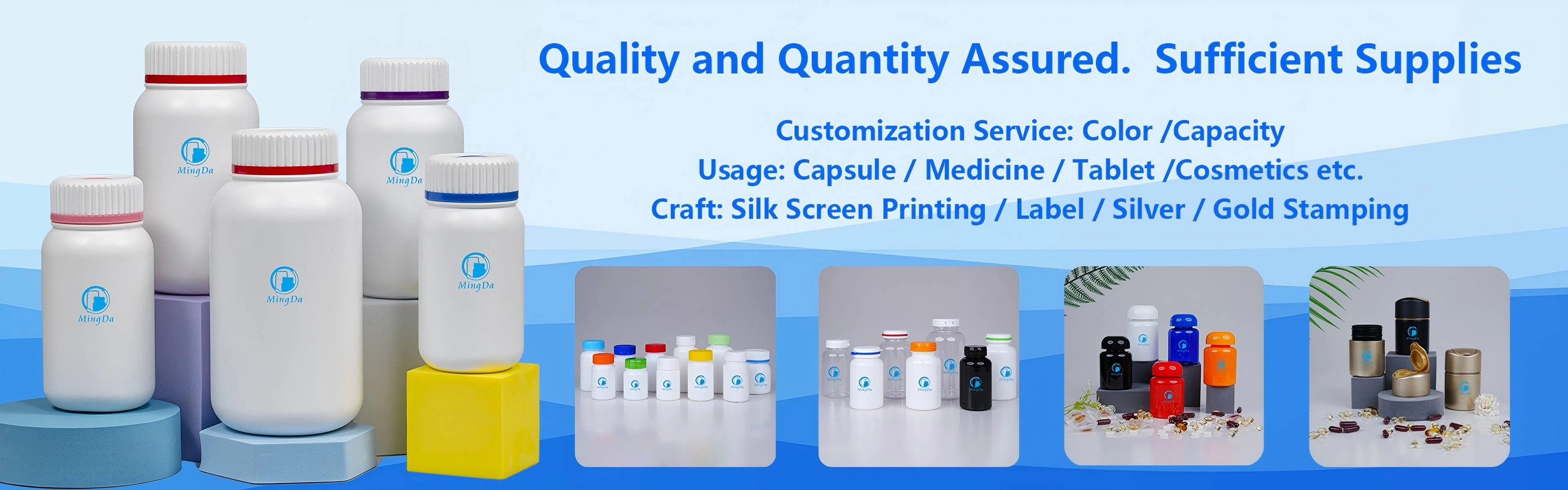




The vitamin and dietary supplement market is growing rapidly, yet many brands overlook a crucial factor when developing their products - the quality and structure of the bottle. A well-designed vitamin bottle not only protects shelf life and ensures product safety during transport but also strengthens consumer trust in your brand. From a manufacturer's perspective, this guide explains the key characteristics that define a high-quality vitamin bottle and helps brands and buyers make informed, professional choices.
1. Material Safety Comes First
When it comes to packaging that directly contacts food or supplements, material safety is the top priority.
High-quality vitamin bottles are typically made of HDPE (High-Density Polyethylene) or PET (Polyethylene Terephthalate) - both food-grade materials that are odorless, chemically resistant, and compliant with standards such as FDA, SGS, or ISO 22000.
A reliable manufacturer will provide material test reports or infrared spectroscopy analysis to verify that the bottles are BPA-free, ensuring no harmful substances can leach into the product - a key concern for health-conscious brands.
2. Sealing Performance Determines Product Longevity
The bottle's sealing capability directly affects how long the product remains active and protected.
A good vitamin bottle combines a well-designed cap structure with pressure-sensitive liners or foil seals to create dual protection - preventing moisture, oxidation, and leakage during transit.
Reputable manufacturers conduct vacuum seal tests (27 kPa for 2 minutes) and cap-tightening force tests to ensure every bottle passes rigorous safety and stability standards before shipment.


3. Impact Resistance and Temperature Stability
During storage and shipping, vitamin bottles are exposed to handling stress and temperature fluctuations.
That's why impact resistance and thermal stability are critical.
Bottles made with high-toughness HDPE perform well in drop tests, resisting cracks and deformation.
For export or high-temperature markets, factories often perform high-temperature aging and cold-resistance tests to ensure the bottle structure remains intact under extreme conditions.
4. Balanced Bottle Neck and Opening Torque
A good bottle should be easy to open but secure enough to prevent leaks.
Manufacturers achieve this balance through torque testing, which ensures the opening force is neither too tight nor too loose - providing a smooth user experience.
Different markets and products may also require varied cap designs, such as PP child-resistant caps, LDPE tear-off caps, metal-like caps, or double-layer caps, offering flexibility for brand positioning and functionality.


5. Appearance Reflects Brand Value
Modern vitamin packaging does more than protect the product - it communicates brand identity.
With screen printing, UV coating, or spray-painting, brands can highlight their logo, product details, or visual identity directly on the bottle surface.
Experienced manufacturers consider color coordination, label areas, and tactile design early in the process to ensure that the final product feels as premium as it looks - both visually and to the touch.
6. Choosing the Right Manufacturer Matters Most
Even the best design is meaningless without reliable production.
Partnering with a manufacturer that operates under strict quality systems ensures consistency, precision, and reliability at scale.
For example, Hubei Mingda Plastics Products Co., Ltd. operates over 1,600 sets of production and testing equipment, maintains a 100,000-grade cleanroom, and holds certifications such as ISO 9001, ISO 22000, ISO 45001, and FDA.
Every bottle undergoes dimensional checks, sealing tests, drop tests, and vibration tests - guaranteeing stable and safe packaging for global brands.


Conclusion
A truly good vitamin bottle is a combination of functionality, safety, and brand expression.
For supplement brands, choosing the right manufacturer not only enhances product quality but also builds long-term consumer trust. After all, great packaging isn't just a container - it's the first impression of your brand.