



Why Choosing a Flip Top Cap Supplier Is More Important Than Many Buyers Expect
When companies develop products such as personal care products, liquid supplements, food sauces, or household chemicals, packaging selection usually focuses on the bottle first.
The cap often comes later.
Many buyers think:
"A cap is only a small plastic component. As long as it fits the bottle, it should work."
I also had this understanding when I first learned about packaging.
However, after being involved in more packaging projects, I found that small components often create the biggest problems.
A bottle cap directly affects:
- Product sealing;
- User experience;
- Transportation safety;
- Packaging consistency;
- Brand reputation.
A flip top cap may only represent a small percentage of the total packaging cost, but a poor-quality closure can create much larger losses.
For example, a liquid product may leak during transportation because the cap does not seal correctly. A consumer may stop using a product because the cap is difficult to open or breaks after several uses.
The problem is not only the cap itself.
The real issue is whether the cap design, material, production process, and bottle compatibility work together.
That is why I believe choosing a flip top cap supplier requires more than comparing prices.

Understanding Flip Top Caps Before Choosing a Supplier
What Is a Flip Top Cap?
A flip top cap is a type of plastic closure that allows users to open and close the container through a hinged mechanism.
Unlike traditional screw caps, users do not need to completely remove the cap during use.
The typical structure includes:
A cap body;
A hinged connection area;
A dispensing opening;
A sealing system;
A connection part that matches the bottle neck.
This simple structure makes flip top caps popular in products that consumers use frequently.
Common applications include:
Shampoo bottles;
Body wash containers;
Liquid soap packaging;
Food sauce bottles;
Sports nutrition products;
Liquid supplements.
However, from a purchasing perspective, the important question is not:
"Can the supplier make a flip top cap?"
Almost every plastic packaging manufacturer can answer yes.
The more important question is:
"Can the supplier produce a flip top cap that remains stable during millions of opening cycles and long-distance transportation?"
The Small Structure Behind a Reliable Flip Top Cap
The Hinge Design Determines Long-Term User Experience
Many buyers focus on the appearance of a flip top cap.
They check:
Color;
Shape;
Logo appearance.
However, I pay more attention to the hinge area.
The hinge is one of the most important parts because consumers repeatedly open and close the cap during daily use.
A weak hinge may cause:
Cracking;
Breaking after repeated use;
Poor opening feeling.
For a shampoo or body wash brand, this directly affects customer experience.
A consumer may not know why the packaging feels low quality, but they notice when a cap does not work smoothly.
During supplier evaluation, I recommend checking:
Opening resistance;
Hinge flexibility;
Repeated opening performance;
Production consistency between batches.
A good sample is not enough.
The supplier needs to prove that mass production can maintain the same quality.

Sealing Performance Determines Product Protection
Many people think:
"If the cap closes, the product is protected."
This is not always true.
A good flip top cap needs to provide reliable sealing.
The sealing structure affects:
Leakage prevention;
Shelf life protection;
Transportation safety.
This becomes especially important for export shipments.
A bottle may travel thousands of kilometers by sea before reaching the customer.
During transportation, products experience:
Temperature changes;
Vibration;
Pressure changes;
Long storage periods.
If the cap and bottle neck are not properly matched, small sealing problems can become major complaints.
For this reason, I always recommend testing:
Cap and bottle compatibility;
Leakage resistance;
Closing performance.
Flip Top Cap vs Screw Cap: Which Closure Is Better?
The Real Question Is Not Which Cap Is Better
One common mistake I see during packaging selection is that buyers ask:
"Is flip top cap better than screw cap?"
In reality, there is no universal answer.
The correct choice depends on:
Product type;
Usage frequency;
Storage requirements;
Consumer habits;
Packaging cost.
A closure system should support the product, not simply follow market trends.


When Should You Choose a Flip Top Cap?
Flip top caps work well for products that consumers open frequently.
Typical applications include:
Personal Care Products
Examples:
Shampoo;
Conditioner;
Body wash;
Shower gel.
Consumers usually use these products several times per week, sometimes every day.
The biggest advantage is convenience.
Users can open the bottle with one hand and quickly dispense the product.
Liquid Supplements
Some liquid nutritional products also use flip top caps.
For example:
- Liquid vitamins;
- Sports nutrition drinks;
- Functional beverages.
- In these applications, user experience becomes an important factor.
A convenient closure design can improve product acceptance.
Food Products
Many food products also use flip top caps.
Examples:
Sauces;
Syrups;
Seasonings.
The cap helps control dispensing and reduces product waste.
When Should You Choose a Screw Cap?
Screw caps remain one of the most common closures in pharmaceutical and supplement packaging.
Typical applications include:
Vitamin bottles;
Tablet containers;
Capsule bottles;
Powder supplements.
The main advantages include:
Better Long-Term Sealing
For products that require longer storage periods, screw caps often provide reliable sealing performance.
This is one reason why many pharmaceutical bottles and supplement bottles use screw closures.
Lower Production Cost
The structure of a screw cap is relatively simple.
For large-volume packaging projects, cost efficiency becomes an important factor.
Suitable for Dry Products
Products such as:
Tablets;
Capsules;
Powder supplements;
usually do not require frequent opening and closing during daily use.
A screw cap provides a practical balance between protection and cost.
My Recommendation: Choose Based on Product Requirements
I do not recommend choosing a closure only because another brand uses it.
A better approach is to evaluate the product itself.
| Product Type | Recommended Closure |
|---|---|
| Shampoo | Flip Top Cap |
| Body Wash | Flip Top Cap |
| Liquid Food Products | Flip Top Cap |
| Liquid Supplements | Flip Top Cap |
| Vitamin Tablets | Screw Cap |
| Capsules | Screw Cap |
| Powder Supplements | Screw Cap |
The best packaging solution is not always the most advanced one.
It is the one that matches the product, production process, and customer usage habits.
How Should Buyers Evaluate a Flip Top Cap Supplier?
Choosing a flip top cap supplier is not only about finding a company that can produce plastic closures.
I have seen buyers spend a lot of time comparing quotations, but they often overlook the factors that determine whether the packaging will work smoothly after mass production.
A supplier may offer a low price and provide attractive samples, but the real test comes after production starts.
For packaging projects, I usually focus on four questions:
Can the supplier maintain consistent quality?
Can the cap match my bottle correctly?
Can the supplier support long-term production?
Can the supplier solve problems quickly when something changes?
These questions are more important than the initial quotation.
1. Check Bottle and Cap Compatibility Before Ordering
One of the most common mistakes I see is that buyers treat the bottle and cap as two independent products.
In reality, they are one packaging system.
A flip top cap must match:
Bottle neck size;
Thread design;
Inner sealing structure;
Filling process;
Production equipment.
For example, a buyer may purchase bottles from one supplier and caps from another supplier because the price looks better.
However, during filling production, they discover:
The cap cannot close smoothly;
The sealing is not stable;
The filling line needs adjustment.
At this point, changing suppliers becomes expensive because production has already started.
My suggestion is simple:
Before placing a bulk order, always test the complete packaging combination.
Do not only test the cap.
Test the bottle + cap + filling process together.
2. Material Selection Affects Performance
Many buyers focus on appearance but ignore plastic material selection.
Most flip top caps use materials such as:
PP (Polypropylene);
PE (Polyethylene);
Recycled plastic materials for certain applications.
Different materials create different performance characteristics.
PP Flip Top Caps
PP is widely used for closures because it offers:
Good rigidity;
Good heat resistance;
Stable molding performance.
It works well for many daily-use products.
PE Flip Top Caps
PE materials provide:
Better flexibility;
Good impact resistance;
Good chemical compatibility.
They are suitable for products requiring more flexibility.
Recycled Materials
Some brands now consider recycled materials because sustainability has become an important purchasing factor.
However, buyers need to confirm:
Material source;
Applicable regulations;
Appearance requirements;
Product compatibility.
Environmental goals should not replace product safety requirements.
3. Mold Quality Determines Production Stability
Many people think plastic injection molding is a simple process.
I used to underestimate the importance of molds as well.
However, after seeing different production results, I realized that mold quality directly affects:
Product consistency;
Production efficiency;
Defect rate;
Long-term cost.
A poor-quality mold may create problems such as:
Uneven wall thickness;
Flash around the cap edge;
Inconsistent closing force;
Poor appearance.
These problems may not appear from the first few samples.
They often appear after thousands or millions of production cycles.
When selecting a supplier, I recommend asking:
Does the company develop molds internally?
How do they maintain molds?
How do they control production tolerance?
A professional manufacturer should have clear answers.
4. Production Capacity Matters for Growing Brands
A common mistake for new brands is choosing suppliers based only on the first order.
For example:
A startup may initially need 30,000 caps.
The supplier delivers successfully.
One year later, the brand grows and requires 500,000 caps.
At that point, production capability becomes important.
A reliable supplier should have:
Stable production equipment;
Experienced production teams;
Quality control systems;
Supply planning ability.
The best supplier is not necessarily the one that can complete your first order.
It is the one that can support your future growth.
Top 10 Flip Top Cap Suppliers to Consider
Before introducing these companies, I want to explain one point.
I do not consider this a strict ranking from number one to number ten.
Different suppliers have different strengths.
A global brand requiring worldwide supply may choose a different supplier from a growing supplement company looking for flexible customization.
The purpose of this list is to help buyers understand different supplier types.
1. AptarGroup
AptarGroup is a global packaging company specializing in dispensing systems and closure solutions.
The company serves industries including:
Healthcare;
Beauty;
Personal care;
Consumer products.
Its strength is not only manufacturing but also packaging innovation.
Aptar is suitable for companies looking for:
Advanced dispensing solutions;
Functional packaging designs;
Premium consumer packaging.
For high-end personal care or healthcare applications, Aptar has strong technical experience.
2. Berry Global
Berry Global is one of the largest plastic packaging manufacturers worldwide.
The company provides a wide range of packaging solutions, including closures.
Its advantages include:
Large manufacturing capacity;
Global production network;
Experience with many industries.
For multinational companies that need stable international supply, Berry Global can be a strong option.
However, smaller brands should also consider whether a large supplier can provide enough flexibility for customized projects.
3. Silgan Closures
Silgan Closures focuses on packaging closure solutions.
The company serves industries such as:
Food;
Beverage;
Consumer products.
Its experience in closure manufacturing makes it a recognized supplier for companies requiring reliable cap production.
4. BERICAP
BERICAP specializes in plastic closures for different packaging applications.
The company has experience in:
Closure design;
Manufacturing;
Global supply.
Its advantages include strong engineering capability and experience with customized closure requirements.
5. United Caps
United Caps focuses on innovative plastic closure solutions.
The company provides packaging components for industries including:
Food;
Beverage;
Household products.
Its strengths include:
Custom closure development;
International customer service;
Sustainable packaging solutions.
6. Mold-Rite Plastics
Mold-Rite Plastics specializes in plastic containers and closures.
The company provides customized packaging solutions for industries such as:
Healthcare;
Beauty;
Food.
Its advantage is flexibility in packaging development.
For brands that need specific closure designs, this type of supplier can provide valuable support.
7. Taizhou Huangyan Plastic Packaging Manufacturers (China)
Taizhou Huangyan is well known for its plastic mold manufacturing industry.
The region has strong advantages in:
Injection molding;
Mold development;
Plastic product manufacturing.
Many Chinese packaging companies rely on this industrial supply chain.
For buyers looking for customized flip top caps, Chinese manufacturers often provide competitive advantages in:
Development speed;
Customization;
Production cost.
8. Zhongshan Plastic Packaging Manufacturers (China)
Zhongshan has developed a strong plastic packaging manufacturing industry.
Many suppliers in this area produce:
Flip top caps;
Lotion pumps;
Plastic closures;
Cosmetic packaging components.
Their advantages include:
Flexible OEM service;
Fast communication;
Competitive manufacturing costs.
9. Ningbo Plastic Packaging Manufacturers (China)
Ningbo has many export-oriented plastic manufacturers.
These suppliers often have experience serving overseas customers.
Their advantages include:
Export process knowledge;
International communication experience;
Diverse packaging products.
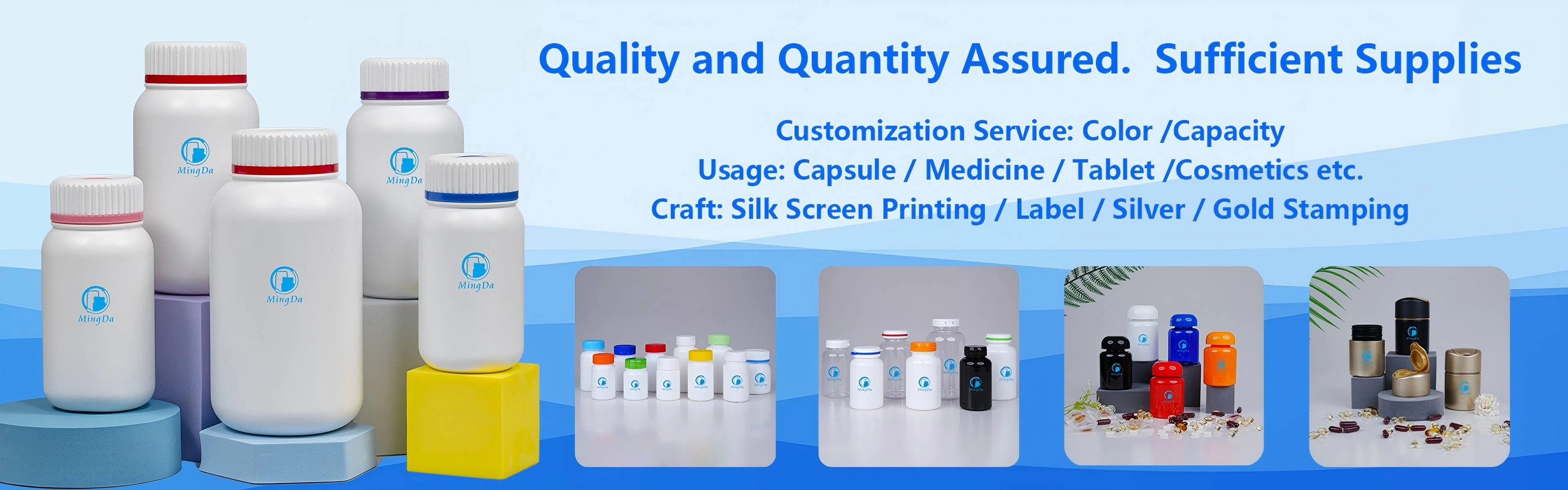
10. Hubei Mingda Plastics Products Co., Ltd.
Hubei Mingda focuses on plastic packaging solutions for industries including:
Pharmaceutical;
Dietary supplements;
Food products.
The company provides:
HDPE bottles;
PET bottles;
Plastic caps;
Custom packaging solutions.
One advantage of working with an integrated packaging manufacturer is better coordination between bottles and closures.
For supplement and pharmaceutical customers, bottle and cap matching is extremely important.
A complete packaging solution can help reduce:
Compatibility issues;
Communication costs;
Production risks.
Mingda focuses on supporting customers with:
OEM customization;
Bottle and cap matching;
Stable mass production;
Packaging development support.
Common Problems Buyers Face After Choosing the Wrong Supplier
Leakage Problems
Leakage is one of the most common packaging complaints.
The reasons may include:
Incorrect bottle and cap matching;
Poor sealing design;
Production inconsistency.
The solution is not always changing the cap.
Sometimes the entire packaging system needs adjustment.
Broken Hinges
A flip top cap depends on the hinge structure.
If the material or production process is unstable, the hinge may break during repeated use.
This is why testing only one sample is not enough.
Color Differences Between Batches
For branded products, appearance consistency matters.
A small color difference between production batches can affect the professional image of the product.
Buyers should confirm:
Color standards;
Production control;
Sample approval process.
Questions Buyers Should Ask Before Ordering Flip Top Caps
Before sending a purchase order, I recommend asking suppliers practical questions.
Instead of only asking:
"Please send your quotation."
Ask:
Can this cap match my bottle neck size?
Because compatibility is more important than price.
Other important questions include:
What material do you use for the cap?
Can you provide samples before bulk production?
What is your MOQ?
Do you support custom colors?
Can you provide quality inspection reports?
How do you control production consistency?
A professional supplier should answer these questions clearly.
My Final Advice: Choose a Packaging Partner, Not Just a Cap Supplier
After working with different packaging projects, I believe the biggest difference between suppliers is not whether they can manufacture a plastic cap.
Many companies can produce flip top caps.
The real difference is whether they understand packaging problems and help customers avoid them.
A reliable supplier should support:
Product selection;
Compatibility testing;
Quality control;
Production planning;
Long-term cooperation.
A flip top cap may be a small component, but it plays an important role in protecting the product and improving user experience.
The right supplier helps brands reduce packaging risks and build a more stable supply chain.
Conclusion
Finding the right flip top cap supplier is not about choosing the company with the lowest price or the largest production scale.
The best supplier is the one that matches your product requirements.
Before making a decision, I recommend evaluating:
Material quality;
Mold capability;
Production stability;
Customization support;
Bottle compatibility.
A good closure system does more than close a bottle.
It protects the product, supports the brand image, and creates a better experience for customers.