

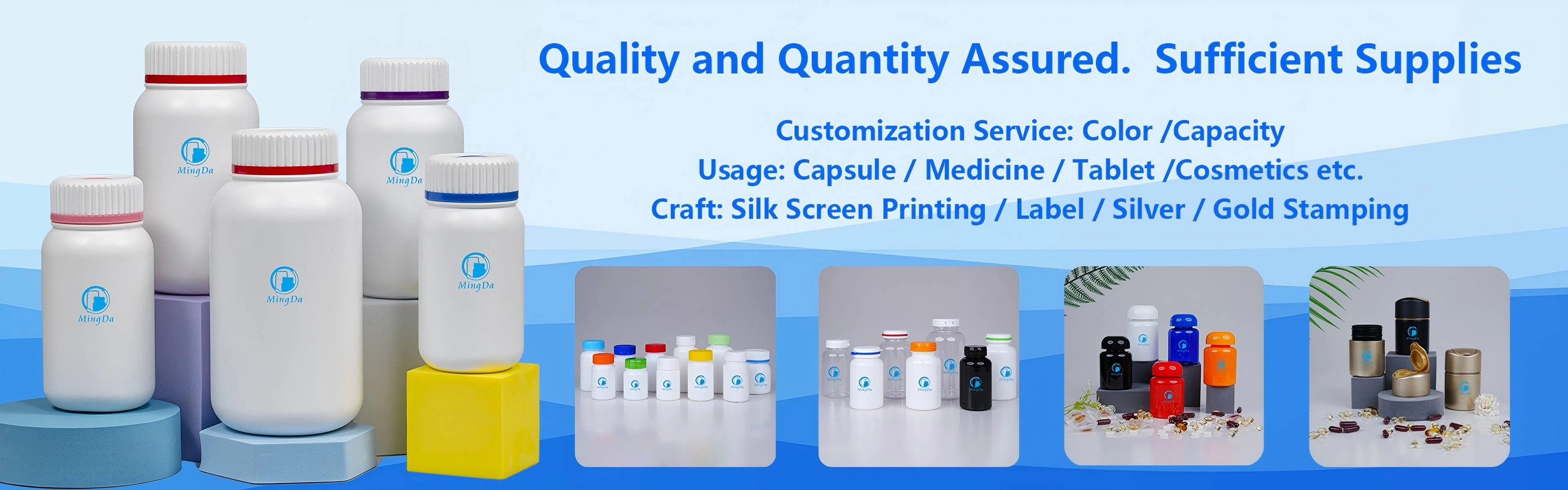




Both materials dominate specific sectors: plastic bottles are prevalent in personal care and beverages, while metal cans remain strong in the food and beverage industry.
When deciding between the two, manufacturers and brand owners must consider several factors: cost, environmental impact, product compatibility, and consumer convenience.
Material Properties Comparison
Plastic Bottles
Common Materials: PET, HDPE, PP
Key Characteristics:
- Lightweight and shatter-resistant
- Flexible and moldable into various shapes
- Transparent or opaque options are available
- Excellent for health care and pharmaceutical products
Metal Cans
Types: Aluminum cans, Tinplate (steel) cans
Key Characteristics:
- Excellent barrier to light, oxygen, and moisture
- High strength and durability
- Good thermal conductivity (ideal for heat sterilization)
- Typically non-transparent and heavier than plastic
Production Cost Comparison
| Factor | Plastic Bottles | Metal Cans |
|---|---|---|
| Raw Material Cost | Generally lower | Higher (especially aluminum) |
| Production Process | Blow molding, extrusion | Stamping, welding |
| Scalability | High-speed, flexible | High but more rigid in shape |
| Transportation | Lightweight, space-saving | Heavier, higher shipping cost |
Plastic bottles, especially HDPE bottles, are often the go-to for cost-effective, high-volume production.
Product Protection Performance
Barrier Properties:
- Metal cans offer superior protection against light and oxygen.
- Plastic bottles (especially multi-layer or with UV coating) also provide excellent protection for non-carbonated or less light-sensitive contents.
Chemical Resistance:
- HDPE and PP bottles are highly resistant to acids, alkalis, and solvents.
- Metal cans may require inner coatings to prevent corrosion.
Temperature Tolerance:
- Metal cans withstand high-heat sterilization.
- HDPE bottles offer moderate heat resistance and excellent cold resistance.
User Experience
| Feature | Plastic Bottles | Metal Cans |
|---|---|---|
| Opening Mechanism | Twist-off caps, flip caps | Pull tabs (one-time use) |
| Resealability | Yes (screw caps, flip lids) | No (single-use) |
| Portability | Lightweight, durable | Heavier, crushable |
| Drinkability | Direct drink possible | Often poured or consumed in one go |
Plastic bottles offer better reusability and on-the-go convenience, especially for personal care and beverage use.
Best Application Scenarios
| Use Case | Plastic Bottles | Metal Cans |
|---|---|---|
| Water & Juice | ✅ Transparent display, lightweight | ❌ Not ideal for freshness visibility |
| Shampoo, Lotion, Hand Sanitizer | ✅ Easy dispensing, resealable | ❌ Not suitable |
| Carbonated Beverages (Soda, Beer) | ❌ Gas barrier limits carbonation | ✅ Excellent pressure retention |
| High-Temp Sterilized Food | ❌ Limited heat tolerance | ✅ Suitable for retort processing |
Look for Environmental Certifications
FDA-approved materials, ISO, and HACCP compliance
https://www.chinaplasticsbottles.com/our-certificate
Conclusion
Choosing between plastic bottles and metal cans depends on your product's requirements, brand goals, and sustainability commitments. While metal cans shine in barrier protection and carbonated drinks, plastic bottles, especially HDPE, are more cost-efficient, lightweight, and versatile for a wide range of applications.