

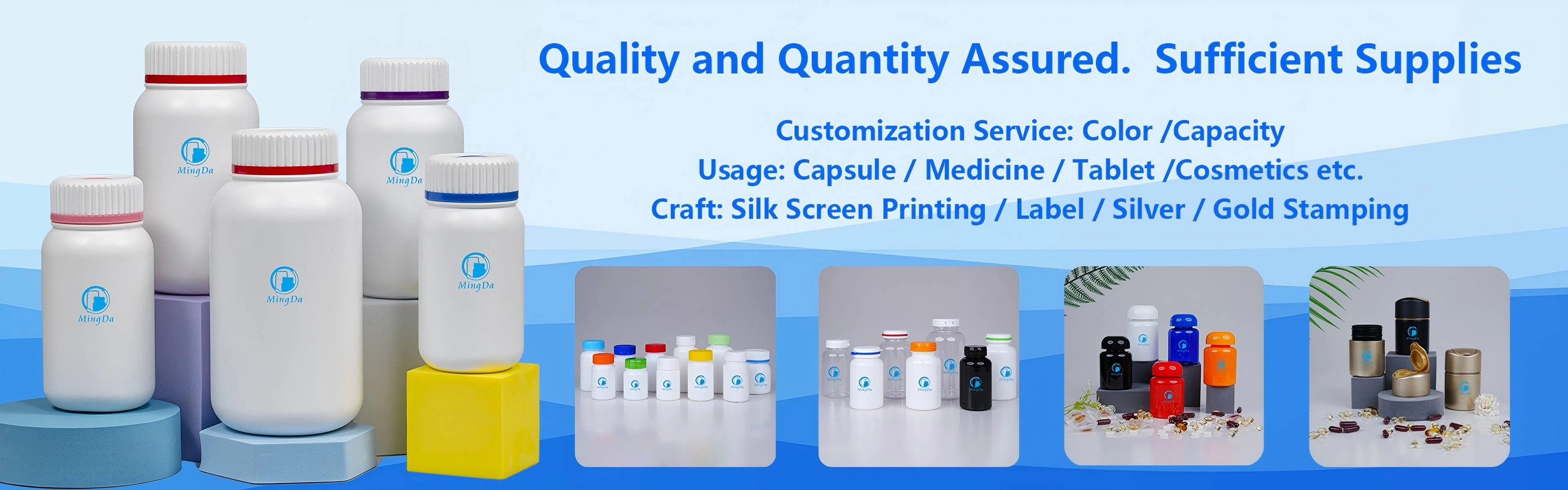


Plastic bottles are everywhere - from food and supplements to pharmaceuticals, cosmetics, and chemicals. When buyers start sourcing plastic packaging, most of the attention usually goes to price, MOQ, and lead time. One critical factor often gets overlooked: whether the manufacturer has in-house tooling capability.
From what I've seen across the plastic packaging industry, tooling is not a minor detail. It often determines how reliable a factory really is and how smooth the cooperation will be over time. In this article, I'll break down why in-house tooling matters and how buyers can use it as a practical benchmark when choosing a plastic bottle manufacturer.
What In-House Tooling Really Means in Plastic Bottle Manufacturing
In-house tooling means that mold design, mold making, testing, and ongoing maintenance all happen inside the factory, rather than being outsourced to a third-party mold shop.
I like to think of it this way: if a manufacturer controls the molds, they control the bottle. Factories with true in-house tooling usually handle:
- Bottle structure and shape design based on capacity and application
- 3D modeling and feasibility analysis
- CNC machining, polishing, and trial molds
- Continuous mold maintenance during mass production
Manufacturers that rely entirely on outsourced molds tend to have less flexibility and slower response times, especially when changes are needed.


Why In-House Tooling Matters to Buyers
Faster Customization and Sampling
Custom requirements are almost unavoidable. Sometimes the bottle height needs adjustment. Sometimes the neck finish needs to match a specific cap or liner. When molds are outsourced, even small changes can take weeks of back-and-forth communication.
Manufacturers with in-house tooling can evaluate and modify molds internally. I've seen projects where revised samples were ready in one to two weeks - a huge advantage when timelines matter.
Better Consistency from the Start
Bottle consistency starts with mold accuracy. Neck dimensions, thread depth, sealing surfaces - all of these depend on the mold itself.
When tooling stays inside the factory, engineers can fine-tune details during production instead of reacting after problems appear. This kind of control greatly reduces batch variation and quality surprises.
Lower Long-Term Cost, Not Just a Lower First Quote
Many buyers focus on the unit price of the first order. What often gets ignored are the long-term costs: repeated mold revisions, delayed launches, rejected batches, or rework.
In-house tooling supports long-term projects and repeat orders. Once a mold is properly developed, it can be optimized and reused, making overall costs more predictable and manageable.
Industries That Benefit Most from In-House Tooling
Some industries feel the impact of tooling quality more than others:
- Food and beverage packaging – sealing performance and dimensional stability are critical
- Nutraceutical and pharmaceutical bottles – neck precision affects liners and moisture protection
- Cosmetics and personal care – appearance consistency and custom shapes matter
- Chemical and industrial packaging – structural strength depends on smart mold design
In these markets, tooling problems don't just stay in the factory - they show up at the customer's end.
Common Types of Plastic Bottle Manufacturers with In-House Tooling
Large-Scale Integrated Manufacturers
These factories usually have full tooling workshops, large production capacity, and strict quality systems. They work well for high-volume, long-term programs, though small custom projects may move more slowly.
Mid-Sized, Flexible Custom Manufacturers
This group often combines solid tooling capability with faster decision-making. I frequently see them perform well in private-label projects and new product development, where flexibility really matters.
Export-Focused Professional Manufacturers
These manufacturers design molds with international standards in mind and understand overseas market requirements. They tend to be a good fit for buyers targeting the U.S., Europe, or Japan.
How Buyers Can Verify Real In-House Tooling Capability
When evaluating suppliers, I usually recommend asking a few direct questions:
- Are molds fully made and maintained in-house?
- How long does it typically take to deliver first samples?
- Can the mold be adjusted or optimized after trial production?
Beyond questions, there are practical signs that are hard to fake:
- Willingness to share real tooling workshop photos or videos
- Direct involvement of tooling engineers in early discussions
- Ability to suggest structure improvements based on the end use
Factories with real tooling expertise tend to talk more about technical details, not just pricing.
In-House Tooling vs. Outsourced Tooling: A Buyer's View
From a sourcing perspective, the differences are clear:
- Development speed – faster with in-house tooling
- Quality consistency – easier to control internally
- Risk management – problems get solved on-site
- Long-term cooperation – better for ongoing optimization
These gaps may not show up in a single order, but they become very visible over months or years of cooperation.
Practical Tips When Choosing a Plastic Bottle Manufacturer
When I look at plastic bottle suppliers, I try to think beyond the first order:
- Don't judge by price alone - evaluate manufacturing depth
- Check whether the supplier understands your final application
- Look for a partner that can support long-term product evolution
Price always matters, but consistency and control often decide whether a project succeeds.
Final Thoughts
In-house tooling isn't a marketing buzzword. It's a core capability that reflects how much control a manufacturer truly has over quality, timelines, and problem-solving.
For buyers who value stability, scalability, and fewer surprises, working with a plastic bottle manufacturer that has real in-house tooling capability is often the smarter long-term choice.