

In my years working with plastic bottles, I've seen brands struggle because they picked the wrong type for their products. Leaks, deformations, and shipping damage are common issues when people focus only on how a bottle looks instead of understanding how HDPE and PET bottles are made.
Once you understand the manufacturing process, choosing the right bottle becomes much easier. Here's a practical breakdown based on my experience, along with actionable tips for buyers.
1. Uses of HDPE and PET Bottles
Every day, I handle both HDPE bottles and PET bottles, and they cover nearly all packaging needs.
(1) HDPE bottles are ideal for:
- Supplements (tablets, soft and hard capsules)
- Pharmaceuticals
- Food powders and grains
- Chemicals and cleaning products
HDPE is impact-resistant, chemical-stable, and highly durable, making it perfect for opaque, functional packaging.


(2) PET bottles are great for:
- Beverages
- Transparent supplement containers
- Cosmetic and essential oil bottles
- Capsules or pills
PET shines because of its clarity, premium look, and hygienic qualities, which is why brands use it when they want the product to show through the packaging.


2. How HDPE Bottles Are Manufactured
HDPE bottles are relatively straightforward to produce. Once you understand HDPE bottle manufacturing, you can quickly tell if a supplier is reliable.
Step 1: Raw Material – HDPE Resin
HDPE starts as resin pellets. The cleaner and more uniform the pellets, the stronger the bottle. Poor-quality pellets can lead to soft walls, uneven thickness, and cloudy colors.
Step 2: Extrusion Blow Molding
The main steps are: heat → extrude → blow → cool & release.
Here's what happens in the factory:
- Pellets are poured into a hopper
- Heated until melted
- Extruded into a tube (parison)
- Mold clamps around the parison
- Air is blown in to form the bottle shape
- Bottle cools and is removed from the mold
HDPE's quick cooling and shape stability make it ideal for supplements, pharmaceuticals, and other products that need strength.


Step 3: Quality Checks
I always verify:
- Seal integrity (cap fit and torque)
- Drop resistance (can the bottle survive shipping?)
- Wall thickness consistency
- Temperature tolerance
Skipping these tests usually signals poor quality control.
3. How PET Bottles Are Manufactured
PET bottles are more complex. The manufacturing process for PET bottles requires precision and careful attention.
Step 1: Raw Material – PET Resin
PET resin must be pure and clear. Any haze or discoloration often means recycled or low-quality material.
Step 2: Perform Production (Injection Molding)
Unlike HDPE, PET is not blown directly into a bottle. Instead, it first becomes a preform, a small test-tube shaped semi-finished product.
Steps:
- Heat PET resin
- Inject into molds to form preforms
- Cool performs
Step 3: Stretch Blow Molding
Next, the preform is blown into a full bottle using either a one-step or two-step method:
Heat preform
Stretch to orient the material
Blow into the final bottle shape
Stretching affects clarity, strength, and overall bottle quality. Even small differences in the process can make a big difference.
Step 4: Quality Checks
For PET bottles, I check:
- Wall thickness uniformity
- Neck precision (for cap fit)
- Transparency and shine
- Any bubbles or defects
PET requires more skill and attention than HDPE, which explains why it costs a bit more.
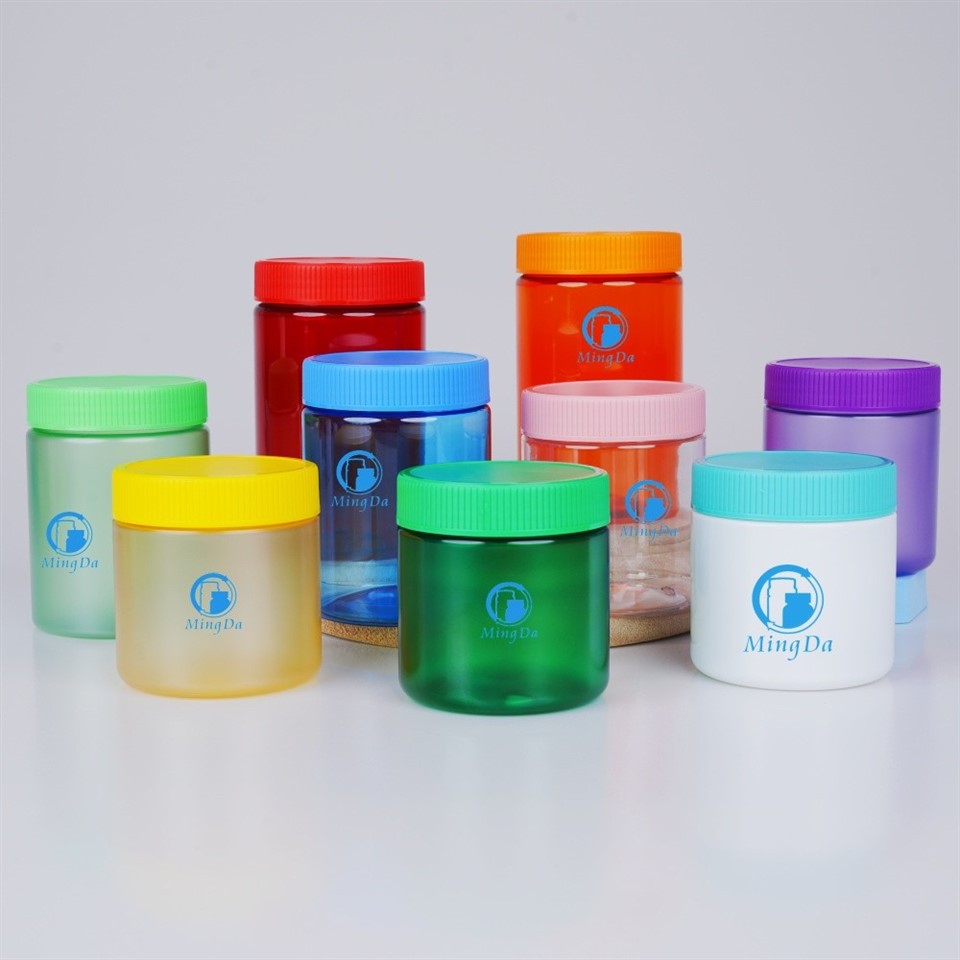

4. Key Differences Between HDPE and PET Bottles
| Feature | HDPE | PET |
|---|---|---|
| Production Process | Extrusion blow molding | Injection molding + stretch blow molding |
| Appearance | Opaque | Clear and premium-looking |
| Common Uses | Supplements, medicines, food, chemicals | Beverages, supplements, cosmetics |
| Strength | High impact resistance | Appearance-focused, sensitive to process |
| Complexity | Moderate | Higher |
| Cost | Lower | Higher |
Quick tip: HDPE focuses on strength, while PET focuses on clarity and finish.
5. Tips for Choosing the Right Plastic Bottle
Understanding the manufacturing process helps you pick wisely. Here are my tips:
Decide between transparent and opaque
- Show product? → PET
- Protect from light? → HDPE
Prioritize HDPE for shipping durability
HDPE handles drops and cold-chain transport better.
Don't skimp on PET quality
Cheap PET often has cloudiness, weak walls, or a poor cap fit.
Check cap and neck compatibility
Many leaks result from mismatched caps and bottle necks.
Request quality reports
Essential checks: seal integrity, torque, drop tests, temperature, and hygiene.


6. Conclusion
A good plastic bottle comes down to materials, production, and attention to detail. Understanding HDPE vs PET production lets you make informed choices instead of relying on looks or price alone.
If you know the process, your products will be safer, your shipments more reliable, and your packaging more professional. Choosing the right bottle is easier when you understand how it's made.