

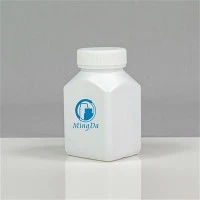
PET plastic bottles are widely used across the food, supplement, and nutrition industries, yet many buyers don't really know how they're made. Understanding how a PET bottle is produced-from raw material to finished packaging-helps you evaluate quality, spot reliable manufacturers, and make smarter purchasing decisions.
How PET Plastic Bottles Are Made - A Practical Guide from a Buyer's Perspective
If you source plastic packaging regularly-especially bottles for supplements or food-grade products-you've probably heard terms like "preform," "blow molding," or "crystallinity." But what actually happens inside a factory? How does a handful of PET pellets turn into a clear, durable bottle?
Let's walk through the entire process in a simple, easy-to-understand way.
1. Raw Material Preparation: Everything Starts with PET Pellets
A qualified manufacturer uses food-grade PET pellets to ensure clarity, safety, and consistency.
Before production, the pellets must be thoroughly dried. PET naturally absorbs moisture, and if the moisture level is too high, the bottle can turn cloudy, weaken, or develop defects.
So when evaluating a factory, check whether they have proper drying and feeding systems. It's one of the easiest ways to tell if they take quality seriously.


2. Injection Molding (Preform): Shaping the "Bottle Blank"

PET bottles aren't blown directly from raw material-they're first molded into what's called a preform.
It looks like a thick-walled test tube and contains the exact amount of material needed for the final bottle.
The injection process determines the stability of the finished bottle. Factors such as:
- the grade of PET resin
- mold cleanliness and precision
- injection temperature and pressure settings
- overall workshop hygiene
All play a major role in quality.
A reliable manufacturer will use automated injection lines and inspect preforms to prevent issues like black dots, bubbles, or warping.
3. Blow Molding: Where the Bottle Takes Its Final Shape
Once the preform is ready, it's reheated and transferred into a blow-molding machine. High-pressure air stretches and expands the preform so it fills the mold cavity, forming the final bottle shape.
Key factors affecting the finished bottle include:
- uniform preform heating
- mold accuracy
- stability of high-pressure air supply
- cooling efficiency
- cleanliness of the blow-molding area
These directly influence clarity, wall thickness, strength, and overall durability.
The more automated and organized the production line, the more consistent the bottle quality tends to be.

4. Quality Testing: A PET Bottle Needs More Than Good Looks
After molding, each batch goes through several quality checks, including:
- appearance inspection (spots, streaks, deformation)
- wall-thickness measurement
- sealing tests
- drop tests
- pressure and heat-resistance tests
- infrared spectroscopy (to verify material purity)
A manufacturer with a complete testing system can provide far more stable quality-something international buyers value greatly.

5. Customization & Surface Finishing
Brands often need customized colors, logos, or surface treatments to make packaging stand out. Common finishing options include:
- screen printing
- hot stamping
- spray coating (matte, glossy, gradient)
- UV coating
If the factory can handle these processes in-house, you'll get better consistency and avoid extra transportation steps.
6. Why PET Plastic Bottle Quality Varies So Much Between Factories
Two bottles may look similar at first glance, but the quality can be drastically different. Reasons include:
- the grade of PET resin used
- how well injection and blow-molding parameters are controlled
- mold precision
- level of automation
- how complete the testing system is
- whether workshops meet food-grade requirements
This is why many overseas buyers see a clear difference once they switch to a more professional manufacturer or supplier.


Conclusion: Knowing the Process Helps You Choose the Right Manufacturer
PET bottle production looks simple, but it relies heavily on equipment, process control, and factory management.
Understanding the basics makes it much easier to identify reliable suppliers and avoid unnecessary headaches.
When choosing a manufacturer or factory for PET plastic bottles, consider:
- whether they have dedicated injection and blow-molding lines
- their testing capabilities
- their customization options
- whether the production environment meets food-grade standards
A solid understanding of the production process is the first step toward building a dependable supply chain.