





Why the Manufacturing Process Matters More Than Most Buyers Realize
When I first started learning about plastic packaging, I assumed that the quality of an HDPE bottle mainly depended on the material itself. If two suppliers both claimed to use food-grade HDPE, I expected their products to perform similarly.
After looking at more packaging projects, I realized that wasn't how it worked.
Two HDPE bottles may look almost identical in photos. They may share the same capacity, color, weight, and even the same neck finish. Yet one performs consistently during filling and shipping, while the other develops sealing issues, dimensional variation, or deformation after transportation.
The difference usually doesn't come from the product catalog.
It comes from the manufacturing process.
That's why I don't think buyers need to become blow molding experts. However, understanding how an HDPE bottle is made helps explain why prices vary, why quality differs between suppliers, and what questions are worth asking before placing an order.
In this article, I won't focus on machine theory or complicated manufacturing terminology. Instead, I'll explain how each stage of production affects the quality, consistency, and long-term performance of HDPE packaging, and why those details matter when sourcing pharmaceutical bottles, supplement bottles, or other food-grade plastic containers.
Many Buyers Think Raw Material Determines Everything. I Used to Think the Same.
One of the most common assumptions I hear is this:
"As long as the supplier uses food-grade HDPE resin, the bottle quality should be fine."
I believed that too.
Today, I see raw material as only the starting point.
The resin matters, but it doesn't guarantee a good bottle. Manufacturing control, tooling precision, process stability, and inspection standards all influence the final result. Good material processed poorly still produces inconsistent packaging.
From a buyer's perspective, the better question isn't simply:
"Is this HDPE?"
Instead, I usually ask:
"How do you ensure every production batch performs the same way?"
That single question often reveals much more about a supplier than asking about resin alone.
Why Resin Quality Still Deserves Attention
Although raw material isn't everything, I never ignore it.
The quality of the resin directly affects how the bottle behaves during production and how it performs after filling.
For food-grade HDPE bottles, consistent resin helps maintain stable dimensions, reliable impact strength, and predictable processing. This becomes especially important for products that require automated filling or long-distance transportation.
I've also noticed that experienced manufacturers usually pay attention to more than the resin grade itself.
They also care about factors such as:
- Batch consistency
- Melt flow characteristics
- Color masterbatch compatibility
- Material traceability
- Storage conditions before production
These details rarely appear in a quotation, yet they often influence production stability far more than buyers expect.
Buying Tip
When discussing materials with a supplier, don't stop at asking whether the resin is food-grade.
A more useful question is:
"How do you keep raw material quality consistent between production batches?"
Suppliers that can answer this confidently usually have better process control than those who simply provide a material certificate.
The Production Line Doesn't Create Quality. It Repeats Quality.
Many buyers become impressed when they see large blow molding machines or modern factory photos.
I understand why.
Large equipment looks convincing.
But over time, I've learned that equipment alone doesn't guarantee consistent packaging.
In fact, one observation keeps coming back whenever I visit manufacturing facilities:
A production line doesn't create quality. It repeats the quality level established by the entire manufacturing system.
If the raw material changes from batch to batch, if temperature settings vary, or if mold maintenance isn't consistent, even advanced equipment struggles to produce identical bottles every day.
That's why I rarely judge a supplier by machine size.
I pay much more attention to whether their manufacturing process remains stable.
One Detail Many Buyers Never Ask About: Material Feeding
Most product catalogs never mention how resin reaches the machine.
However, I think this step deserves more attention than many buyers realize.
Some factories rely heavily on manual feeding.
Others use centralized automatic feeding systems.
At first glance, both methods produce bottles.
The difference appears over time.
Automatic feeding reduces contamination, minimizes mixing errors, and keeps material supply more consistent throughout production. It also helps reduce human error during large production runs.
For companies producing pharmaceutical bottles or food-grade HDPE bottles, that consistency becomes especially valuable because even small variations can affect downstream filling efficiency.
What I've Noticed
Many buyers compare production capacity.
Far fewer ask how that production capacity stays consistent.
Personally, I think consistency matters much more than maximum output.
A supplier capable of producing one million bottles per day doesn't necessarily deliver better products than a supplier producing half that volume with tighter process control.
Buying Tip
Instead of asking:
"How many machines do you have?"
Try asking:
"How do you control material consistency throughout production?"
The answer usually tells you much more about manufacturing capability.
Blow Molding Doesn't Just Shape the Bottle. It Determines How the Bottle Performs.
If I had to identify the single manufacturing stage that influences bottle quality the most, blow molding would probably be my choice.
Many people think blow molding simply gives the bottle its shape.
I see it differently.
This stage determines whether wall thickness stays uniform, whether the neck finish remains accurate, whether the bottle resists impact during transportation, and whether it performs consistently on automatic filling lines.
In other words, blow molding doesn't simply create the bottle's appearance.
It establishes many of its functional characteristics.
Uniform Wall Thickness Matters More Than Most Buyers Expect
Imagine two bottles that look identical from the outside.
Both weigh 100 grams.
Both hold the same volume.
Both use the same cap.
Would they perform exactly the same?
Not necessarily.
If one bottle has uneven wall thickness, several problems may appear later:
- Lower impact resistance during shipping
- Bottle deformation after filling
- Inconsistent squeeze strength
- Reduced stacking performance
- Greater risk of dimensional variation
Most of these issues don't become obvious during sample evaluation.
They often appear only after mass production begins.
That's one reason I rarely judge bottle quality from appearance alone.
Buying Tip
If your products travel long distances or pass through automated filling equipment, ask suppliers how they monitor wall thickness consistency during production.
A supplier with clear quality control methods usually provides more reliable long-term performance than one focusing only on finished appearance.
The Mold Doesn't Just Shape the Bottle. It Determines Production Consistency.
Many buyers assume that once the bottle design has been approved, every future production run will look exactly the same.
I used to think that as well.
After spending more time around packaging projects, I realized that consistency doesn't happen automatically. It depends heavily on something buyers rarely see-the mold.
To me, a mold is much more than a tool that gives a bottle its shape. It defines how consistently that shape can be reproduced over thousands or even millions of bottles.
That consistency matters far more than many people realize.
Why Mold Precision Matters
Imagine you're launching a new dietary supplement. Your labels have already been printed, your automatic filling line has been adjusted, and your caps have passed sealing tests.
Now imagine the bottle neck is only slightly different from the previous production batch.
The change might be almost impossible to notice with the naked eye.
However, it could cause:
- Inconsistent cap torque
- Induction seal failures
- Filling line interruptions
- Label positioning issues
- Increased rejection rates during packing
None of these problems begin in the warehouse.
They begin much earlier-during tooling and mold maintenance.
That's why I don't only ask whether a supplier owns the mold.
I also want to know how they maintain it.
What I've Noticed
Some suppliers proudly advertise that they have hundreds or even thousands of molds.
Personally, I care less about the number.
I'd rather know:
- How often are molds inspected?
- How are worn components replaced?
- How do they keep dimensional accuracy stable over years of production?
A well-maintained mold often produces better bottles than a large mold inventory with inconsistent maintenance.
Buying Tip
If your product relies on automated capping or filling, ask whether the supplier regularly verifies neck dimensions and thread tolerances.
Consistent molds usually lead to more consistent production.
Cooling Is Often Overlooked, Yet It Affects Long-Term Stability
Cooling doesn't receive much attention in most manufacturing articles.
People usually describe it as a simple step after blow molding.
I don't see it that way.
Cooling determines whether the bottle keeps the shape the mold intended.
If cooling isn't well controlled, bottles may leave the production line looking acceptable but gradually deform during storage or transportation.
That becomes especially important for larger HDPE bottles, where even slight deformation can affect stacking strength and filling efficiency.
Why Stable Cooling Improves Product Consistency
When bottles cool evenly, dimensions remain stable.
When cooling varies, several issues may appear:
- Bottles may wobble on filling lines.
- Caps may no longer fit consistently.
- Labels may wrinkle because bottle geometry changes.
- Packed cartons may become less stable during transportation.
These problems rarely appear in product photos.
They usually appear after production has already finished.
That's why I believe manufacturing stability matters more than visual appearance.
Buying Tip
If your products travel internationally, ask suppliers whether they perform dimensional inspections after bottles have completely cooled rather than immediately after production.
This small question often reveals how mature their quality control process is.
Quality Inspection Is Where Reliable Manufacturers Separate Themselves
Many factories can produce bottles.
Fewer factories produce bottles consistently.
The difference usually appears during inspection.
I've noticed that buyers often ask whether a factory has a quality department.
Personally, I think that's only the beginning.
The more useful question is:
How does quality control work throughout production?
Reliable manufacturers don't wait until production finishes to look for problems.
They try to prevent problems from moving to the next process.
The Tests I Usually Pay Attention To
Different applications require different testing methods, but these inspections often tell me whether a factory takes quality seriously.
Leak Testing
A bottle may look perfect while still failing to seal properly.
Leak testing helps identify sealing issues before products reach customers.
For pharmaceutical bottles and food-grade HDPE bottles, this test becomes especially important.
Dimension Inspection
Even small dimensional changes can affect:
- Cap compatibility
- Filling equipment
- Label application
- Packaging efficiency
Stable dimensions reduce unexpected production issues.
Drop Testing
Transportation always introduces uncertainty.
Drop testing helps evaluate whether the bottle can withstand handling, shipping, and distribution without cracking or leaking.
Weight Monitoring
Many buyers associate bottle weight only with material cost.
I look at it differently.
Consistent weight usually indicates a stable manufacturing process.
Unexpected weight variation often signals process fluctuations that deserve further investigation.
Visual Inspection
Modern production lines increasingly rely on automated vision systems.
These systems identify defects such as:
- Flash
- Short molding
- Surface contamination
- Neck defects
- Cosmetic imperfections
Automation doesn't replace people.
It simply helps detect issues earlier and more consistently.
What I've Noticed
Factories that discuss only final inspection often worry me.
The manufacturers I trust usually describe quality as something they monitor from raw materials to finished packaging-not something they check only at the end.
Buying Tip
Instead of asking:
"Do you inspect your products?"
Ask:
"At which stages do you inspect them?"
The answer often reveals whether quality is built into the process or simply checked after production.
Why Similar HDPE Bottles Can Have Very Different Prices
This is probably one of the questions buyers ask most frequently.
At first glance, two bottles may appear identical.
The specifications match.
The capacity matches.
Even the material appears the same.
Yet one supplier quotes USD 0.10 while another quotes USD 0.13.
Many people assume the higher price simply means higher profit.
I don't think it's that simple.
Price differences often reflect differences in:
- Raw material consistency
- Automation level
- Mold maintenance
- Inspection frequency
- Scrap rate
- Packaging standards
- Traceability systems
- Production efficiency
Of course, pricing also depends on order volume, customization, and regional costs.
However, I rarely compare price before understanding how the bottle is produced.
A slightly higher unit price may reduce transportation losses, production downtime, and customer complaints later.
Looking only at the purchase price doesn't always produce the lowest overall cost.
If I Were Evaluating an HDPE Bottle Manufacturer
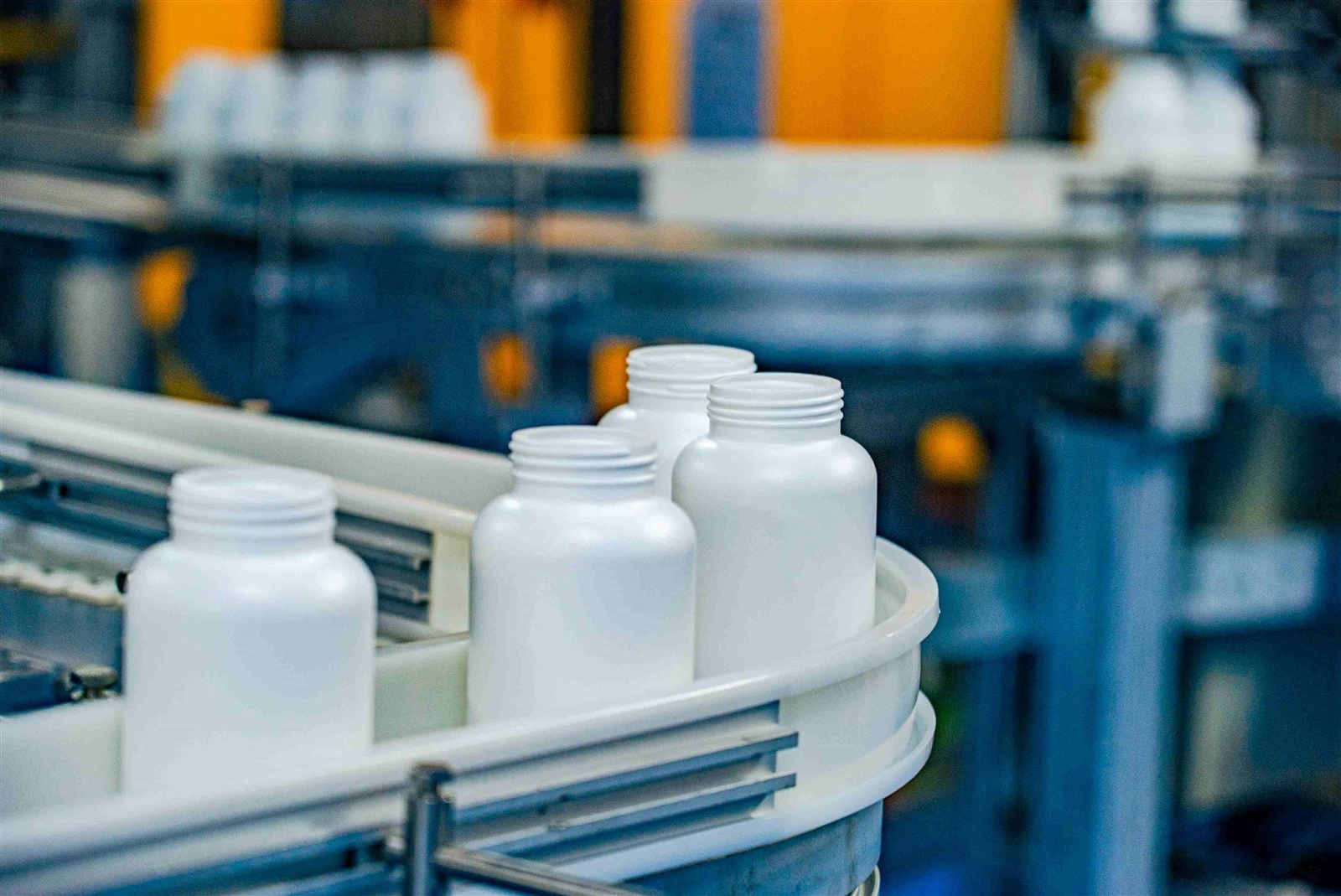
If I had to visit a factory tomorrow, these are the areas I would spend the most time observing.
Not the showroom.
Not the office.
Instead, I would focus on questions such as:
- Does the raw material storage area look organized?
- Is there a centralized feeding system?
- How are molds maintained?
- Are quality records available?
- Is leak testing performed regularly?
- How are defective bottles separated from qualified products?
- Can production batches be traced?
These details tell me much more than impressive marketing brochures.
Final Thoughts
Many people read about the HDPE bottle manufacturing process simply to understand how plastic bottles are made.
I think buyers can gain something much more valuable.
You don't need to become a manufacturing engineer.
However, understanding the production process helps you ask better questions, compare suppliers more effectively, and recognize the difference between a bottle that only looks good and one that performs reliably in real-world applications.
In my experience, successful packaging projects rarely depend on a single manufacturing step.
They result from consistent raw materials, well-maintained tooling, stable production processes, and disciplined quality control working together.
If I were choosing a supplier today, those are the areas I would evaluate first-long before comparing the final quotation.