

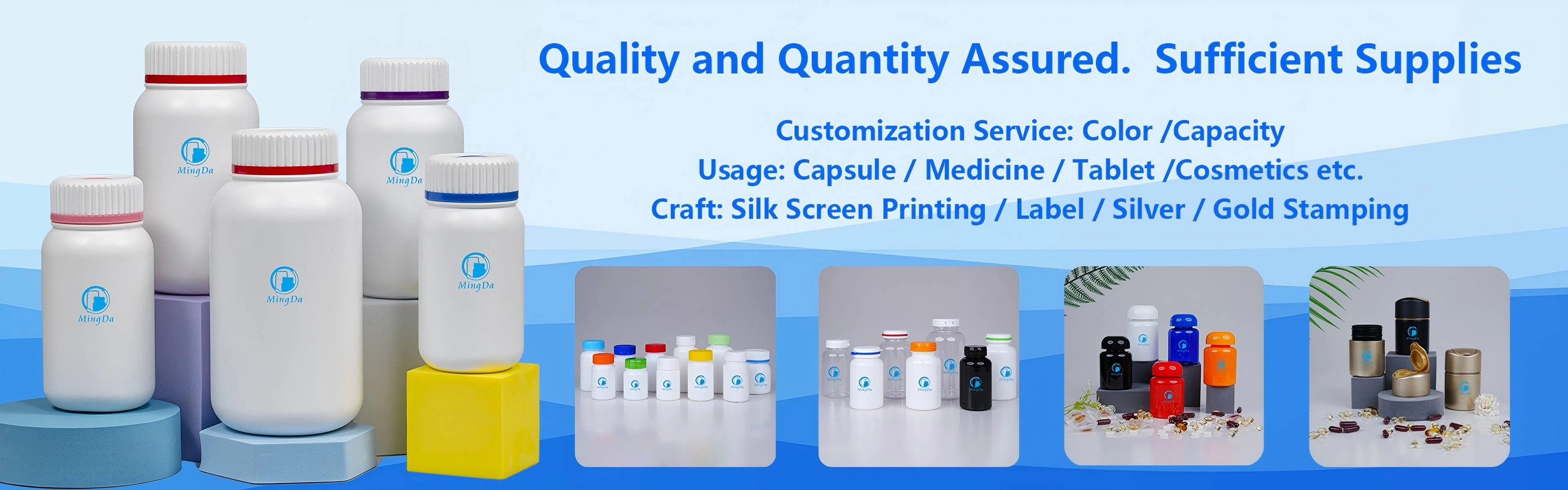


In the plastic packaging industry, LDPE (Low-Density Polyethylene) and HDPE (High-Density Polyethylene) are two of the most commonly used polyethylene materials. Both are widely applied in packaging for food, healthcare, cosmetics, household products, and industrial goods. Although their names are similar, LDPE and HDPE bottles differ significantly in structure, performance, and application.
1. Structural and Density Differences
LDPE has more branching in its molecular chains, resulting in a less compact structure and a lower density (around 0.910–0.940 g/cm³). This gives LDPE its soft, flexible texture with excellent squeezability and stretchability.
HDPE has a more linear structure with fewer branches, leading to higher density (around 0.941–0.965 g/cm³) and stronger mechanical strength. HDPE bottles are known for their stiffness, durability, and chemical resistance.
2. Physical Property Comparison
| Property | LDPE Bottles | HDPE Bottles |
|---|---|---|
| Softness | Softer, more elastic | Stiffer, maintains shape well |
| Impact Resistance | Moderate, suitable for light use | Excellent, ideal for transport |
| Transparency | Typically semi-transparent | Usually opaque |
| Squeezability | Excellent for squeeze bottles | Moderate, better for rigid structures |
3. Application Scenarios
- LDPE Bottles: Ideal for products requiring flexible packaging, such as lotions, children's products, condiments, and disposable items. The soft body allows for easy squeezing, suitable for small-volume or single-use packaging.
- HDPE Bottles: Commonly used for nutritional supplements, shampoos, cleaning agents, disinfectants, and industrial lubricants. The sturdy structure is perfect for high-volume products and those that require safe transportation and storage.