



Top 10 HDPE Plastic Bottle Manufacturers: How to Choose a Long-Term Partner That Truly Fits Your Business
In industries such as food, pharmaceuticals, nutraceuticals, chemicals, and personal care, HDPE plastic bottles are everywhere. When people first start sourcing HDPE packaging, price often becomes the main focus. What gets overlooked is the manufacturer's professionalism, production stability, and long-term reliability.
These overlooked details usually determine whether packaging quality stays consistent, delivery schedules remain predictable, and products can enter target markets smoothly. Based on my long-term observation of the packaging industry, this article breaks down how to evaluate HDPE plastic bottle manufacturers from a practical sourcing perspective and highlights representative manufacturers worldwide. The goal is simple: help you make better decisions and avoid costly mistakes.


Why HDPE Plastic Bottles Continue to Dominate the Global Packaging Market
HDPE (High-Density Polyethylene) did not become the mainstream plastic bottle material by chance.
From real-world experience, its advantages are clear.
First, HDPE offers high structural strength and excellent impact resistance. During transportation, stacking, and long-term storage, HDPE bottles are far less likely to crack or deform.
Second, HDPE provides strong chemical stability. It performs well against acids, alkalis, oils, and many solvents, which makes it suitable for a wide range of products.
Third, HDPE delivers reliable barrier performance. It helps limit air and moisture penetration, a critical factor for food, nutraceutical, and pharmaceutical packaging.
Because of these properties, HDPE plastic bottles are widely used for protein powders, dietary supplements, tablets, liquid foods, cleaning products, and industrial chemicals.


What I Focus on When Evaluating HDPE Plastic Bottle Manufacturers
The market is full of factories that look good on paper. However, only a small number are truly suitable for long-term cooperation. When evaluating HDPE plastic bottle manufacturers, I usually focus on five core factors.
1. Production Experience and Operational Stability
Production experience often reflects much more than the number of years a factory has existed. Manufacturers that have served stable customer groups over a long period tend to develop mature systems for mold management, raw material control, and production consistency.
Experience becomes most valuable when problems arise. A stable manufacturer knows how to respond quickly and effectively. In many cases, stability matters far more than a low price.
2. Completeness of the Product Line
A capable HDPE plastic bottle manufacturer rarely limits itself to just one or two bottle designs. A complete product line allows the factory to support different industries with multiple bottle shapes, capacities, neck finishes, and compatible closure options.
This reduces coordination between multiple suppliers and creates more flexibility for future product expansion. In practice, a broader product range often signals stronger technical depth and manufacturing capability.
3. Whether Customization Can Actually Be Delivered
Many factories claim to offer customization, but real customization goes far beyond color changes or surface appearance. Practical customization involves neck specifications, dimensional tolerances, mold development timelines, and consistency in mass production.
I tend to trust manufacturers that are willing to discuss details early and openly point out potential risks. The ability to explain customization clearly is, by itself, a sign of professionalism.
4. Quality Systems and Compliance Awareness
HDPE plastic bottles used in food, pharmaceutical, and nutraceutical applications must meet clear quality and compliance requirements. Reliable manufacturers understand the standards of different markets and can provide proper testing support and documentation.
Quality is not a promise-it is the result of daily management. Whether a factory truly has a system in place usually becomes obvious after a few technical discussions.
5. Communication Efficiency and Cooperation Attitude
In real projects, communication efficiency directly affects progress. Response speed, clarity of information, and how questions are handled all become more important over time.
A good cooperative attitude does not mean saying yes to everything. It means explaining issues clearly, setting realistic expectations, and addressing concerns early. In the long run, these manufacturers tend to be far more trustworthy.


Representative HDPE Plastic Bottle Manufacturers Worldwide (Real Companies)
Globally, there are many HDPE plastic bottle manufacturers, but only a limited number combine large-scale production with long-term international service experience. The following companies represent different regions and strengths within the global market.
1. Berry Global (USA)
Berry Global is a well-known global packaging group serving food, pharmaceutical, personal care, and industrial markets. Its strengths lie in engineering capability and strict compliance systems, making it suitable for large brands with high regulatory requirements.
2. Amcor (Headquartered in Switzerland, Global Operations)
Amcor focuses on high-end and sustainable packaging solutions. Its HDPE products emphasize lightweight design and environmental responsibility, primarily serving brand-driven customers.
3. Silgan Plastics (USA)
Silgan has long supported food and personal care brands in North America. It is known for stable production and standardized HDPE bottles and closure systems.
4. Graham Packaging (USA)
Graham Packaging has deep experience in liquid packaging. Its HDPE bottles are widely used for food, beverages, and household cleaning products, especially in large-volume, long-term supply programs.
5. Alpha Packaging (USA)
Alpha Packaging focuses on food and nutritional packaging. Its flexibility in HDPE container development makes it suitable for mid-sized brands seeking reliable customization.
6. ALPLA Group (Austria)
ALPLA is a major European packaging manufacturer with a strong focus on innovation and sustainability. Its HDPE products stand out in structural design and material efficiency.
7. RETAL (Europe / Global)
RETAL operates globally and offers HDPE packaging solutions for both food and industrial applications, emphasizing scale and standardized manufacturing.
8. Plastipak Packaging (USA)
Plastipak has extensive experience in bottle manufacturing and excels at maintaining high consistency, making it a strong choice for long-term brand projects.
9. Greiner Packaging (Austria)
Greiner is known for its technology-driven approach and high-end functional packaging, ideal for markets with strong design and performance requirements.
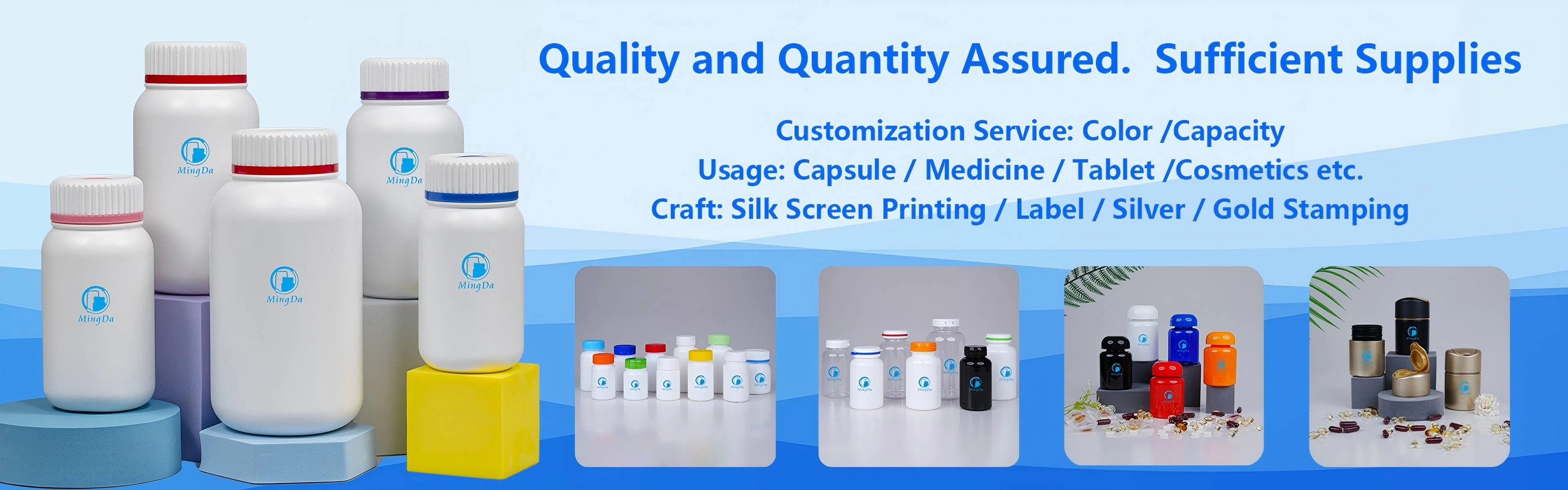
10. Hubei Mingda Plastics Products Co., Ltd. (China)
Among Asian manufacturers, Hubei Mingda Plastics Products Co., Ltd. stands out as a balanced combination of scale, stability, and export experience.
Founded in 2006, Mingda has nearly two decades of experience in plastic packaging manufacturing. The company integrates design, development, production, and sales, with complete production lines for HDPE bottles, PET bottles, and PP caps. This allows Mingda to offer integrated solutions covering bottles, closures, and sealing liners.
From a practical perspective, Mingda demonstrates clear strengths in several areas:
- A wide range of HDPE bottle designs suitable for food, nutraceutical, pharmaceutical, and personal care applications
- Support for multiple sizes, capacities, and long-term OEM projects
- A mature quality management system backed by in-house testing facilities
- Stable export experience with a strong understanding of international compliance and communication expectations
For international buyers seeking a balance between quality control, cost efficiency, and customization flexibility, Mingda represents a highly practical and approachable HDPE plastic bottle manufacturer in China.


Key Differences Between HDPE Plastic Bottle Manufacturers by Region
From a sourcing perspective, no region is inherently better than another. The real question is whether the manufacturer fits your specific needs.
North American and European manufacturers often suit high-standard, low-risk projects.
Asian manufacturers tend to perform well in multi-specification, customized, and cost-sensitive programs.
Emerging market suppliers may work well for regional distribution or basic packaging needs.
I generally recommend defining product positioning and market requirements first, then selecting the most suitable manufacturer type-rather than starting with price comparisons.


How to Choose the Right HDPE Plastic Bottle Manufacturer for Your Product
In real sourcing decisions, "right" matters more than "famous." Based on repeated validation in real projects, these principles consistently work.
1. Define the Application Before Screening Suppliers
Different products require different performance priorities.
Food and nutraceutical products focus on safety and sealing.
Chemical products prioritize resistance and structural strength.
Clear application requirements make supplier screening far more efficient.
2. Assess Long-Term Supply Capability
One-time orders and long-term programs demand different capacities.
I prefer manufacturers with stable production planning and the ability to support rolling orders.
3. Look Beyond Verbal Customization Promises
Reliable manufacturers discuss molds, tolerances, testing methods, and lead times early.
Customization without details often leads to hidden risks later.
4. Focus on Systems, Not Just Samples
A good sample does not guarantee consistent mass production.
I pay closer attention to whether the factory has structured inspection processes and understands target-market standards.
5. Treat Communication Experience as a Key Indicator
The longer the cooperation, the more important communication becomes.
Response speed and clarity often reveal more about a manufacturer than the quotation itself.


Commonly Overlooked Issues When Sourcing HDPE Plastic Bottles
In practice, I often see the same mistakes repeated:
Being satisfied with a single sample while ignoring batch consistency
Failing to confirm mold ownership, which increases switching costs later
Underestimating how lead times and communication delays affect project schedules
These issues are simple, but ignoring them early often leads to expensive consequences later.


Future Trends in the HDPE Plastic Bottle Industry
Current trends point in three clear directions:
Lightweight structural design
Higher use of recyclable and environmentally responsible materials
More integrated, one-stop packaging solutions
Manufacturers that invest in these areas are more likely to remain competitive in the long term.
Final Thoughts
Choosing an HDPE plastic bottle manufacturer has never been solely about rankings. It has always been about alignment with your product, market, and long-term goals.
When you take the time to understand materials, structures, and manufacturing logic, supplier selection becomes far more controlled and predictable. For any specific HDPE packaging project, I would recommend that you evaluate potential partners through the lens of professionalism, stability, and communication experience.