

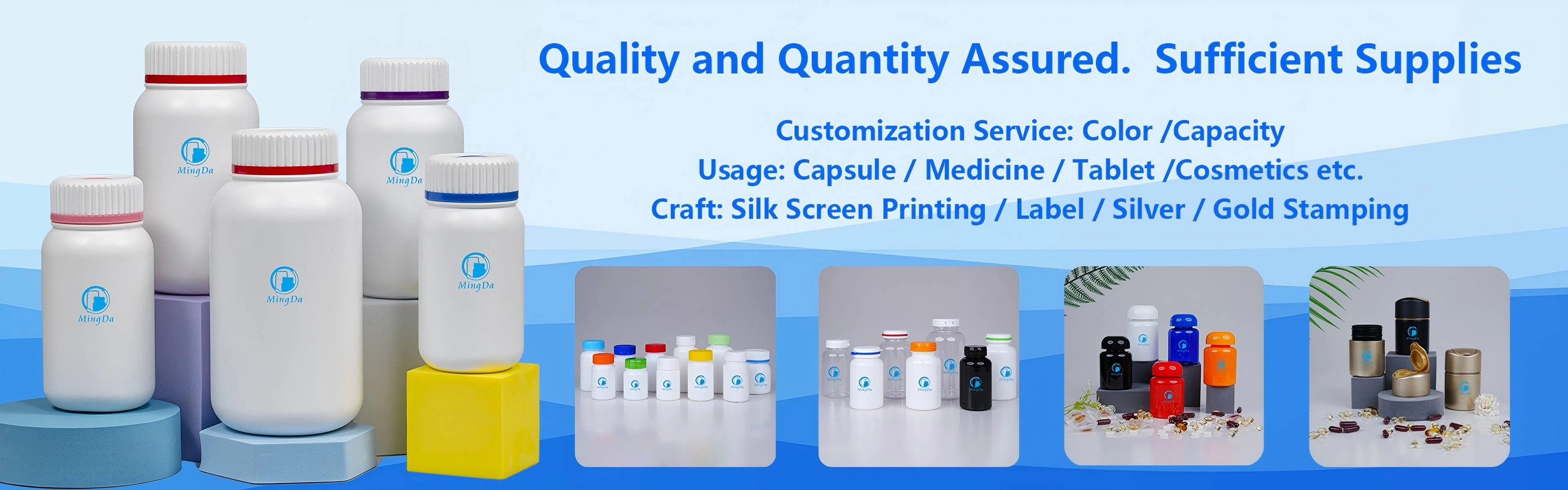



Search for custom plastic bottle manufacturers online, and you'll find hundreds of suppliers offering similar products.
Most websites make similar promises:
- High quality
- Competitive pricing
- Fast delivery
- Professional service
Yet over time, something interesting happens.
Some manufacturers build long-term relationships with customers and continue receiving repeat orders year after year.
Others find themselves constantly competing for new business based almost entirely on price.
Why does this happen?
After years of observing packaging projects across the food, beverage, dietary supplement, and pharmaceutical industries, we've noticed that the difference is rarely the bottle itself.
More often, it comes down to how manufacturers help customers manage risk, solve problems, and support growth.
Price Gets Attention. Reliability Earns Repeat Orders.
Price is usually one of the first topics discussed in any packaging project.
That's understandable.
Packaging costs affect margins, especially for high-volume products.
However, experienced buyers often view price differently from first-time buyers.
A lower quotation may save money today.
A delayed shipment, quality issue, or production interruption can cost far more tomorrow.
One misconception in the packaging industry is that buyers switch suppliers whenever they find a lower price.
In reality, many successful brands stay with the same manufacturer for years because reliability creates value that is difficult to measure on a quotation sheet.
When a supplier consistently delivers on time and maintains stable quality, purchasing becomes easier, forecasting becomes more accurate, and operational risk decreases.
The Best Manufacturers Sometimes Say "No"
Many suppliers are eager to secure new business.
As a result, some will immediately agree to almost any request.
"Yes, we can do that."
"No problem."
"We'll make it work."
At first, this can sound reassuring.
However, experienced procurement teams often become cautious when every idea receives instant approval.
A professional manufacturer understands that packaging decisions involve trade-offs.
For example:
- A custom bottle shape may increase mold costs.
- A special color may extend lead times.
- A thinner bottle wall may reduce material costs but affect durability.
- A unique closure may create compatibility challenges.
The manufacturers that earn long-term trust are often the ones willing to explain these risks before production begins.
Sometimes protecting a project means challenging an idea rather than approving it.
Large Factories Don't Always Mean Better Partnerships
Many buyers assume the largest plastic bottle manufacturing companies automatically provide the best service.
In reality, factory size is only one piece of the equation.
A manufacturer with enormous production capacity may focus primarily on a handful of major accounts.
For smaller and mid-sized brands, responsiveness can sometimes be more valuable than scale alone.
We've occasionally seen buyers move from a smaller supplier to a larger one expecting improvements, only to discover that communication became slower and project flexibility decreased.
The question is not simply:
"How big is the factory?"
A better question is:
"How important will my business be to this factory?"
Long-term partnerships are often built on mutual attention rather than production volume alone.
The Cheapest Supplier Is Rarely the Most Expensive Mistake
Many buyers spend significant time negotiating bottle prices.
Far fewer spend time discussing what could go wrong after production starts.
Yet some of the largest costs in packaging projects are not visible during the quotation stage.
Examples include:
- Production delays
- Failed packaging tests
- Container loading issues
- Cap leakage problems
- Emergency freight arrangements
The difference between two quotations may represent only a small fraction of the final product cost.
The consequences of a supply chain problem can be significantly larger.
This is why experienced buyers often ask:
"What risks should we be considering?"
instead of simply asking:
"Can you reduce the price further?"
Strong Manufacturers Think Beyond the Current Order
One characteristic shared by many successful manufacturers is their ability to think beyond the immediate transaction.
A first order might involve:
- Standard bottle designs
- Basic colors
- Existing molds
But what happens six months later?
What happens when sales double?
What happens when the customer needs a new size, new color, or custom packaging solution?
Manufacturers that earn long-term business typically prepare for these conversations early.
Rather than focusing solely on today's order, they help customers plan for tomorrow's requirements.
This creates a very different type of relationship.
The discussion shifts from pricing to growth.
Why Buyers Rarely Change Suppliers Once Trust Is Established
A common assumption is that packaging suppliers are easily replaceable.
In practice, changing suppliers often involves more work than many people expect.
A new supplier may require:
- Sample verification
- Packaging testing
- Production validation
- Compatibility confirmation
- Regulatory documentation review
Even when a lower quotation is available elsewhere, many buyers decide the potential disruption is not worth the risk.
Once a manufacturer has demonstrated consistent quality, reliable delivery, and effective communication, the relationship itself becomes valuable.
This is one reason why some bottle manufacturing companies maintain customer relationships for many years while others continually compete for new inquiries.
Long-Term Customers Are Usually Earned Before the First Order Is Delivered
Many suppliers believe customer loyalty is built after successful production.
In reality, it often begins much earlier.
Buyers remember:
- How quickly questions were answered.
- Whether technical concerns were addressed.
- How problems were handled.
- Whether expectations matched reality.
Trust is rarely created by marketing claims.
It is created by consistent actions over time.
The manufacturers that understand this tend to focus less on making promises and more on delivering predictable results.
Final Thoughts
The plastic bottle industry is highly competitive.
Many manufacturers can produce similar products, offer comparable pricing, and provide similar customization options.
What separates long-term partners from short-term suppliers is usually not the bottle itself.
It is the ability to reduce risk, communicate honestly, solve problems proactively, and support customer growth.
When evaluating custom plastic bottle manufacturers, consider more than capacity, pricing, or product catalogs.
The supplier that helps your business grow over the next five years may not be the one with the lowest quotation today.
And that is often the lesson experienced buyers learn after working with multiple suppliers.