

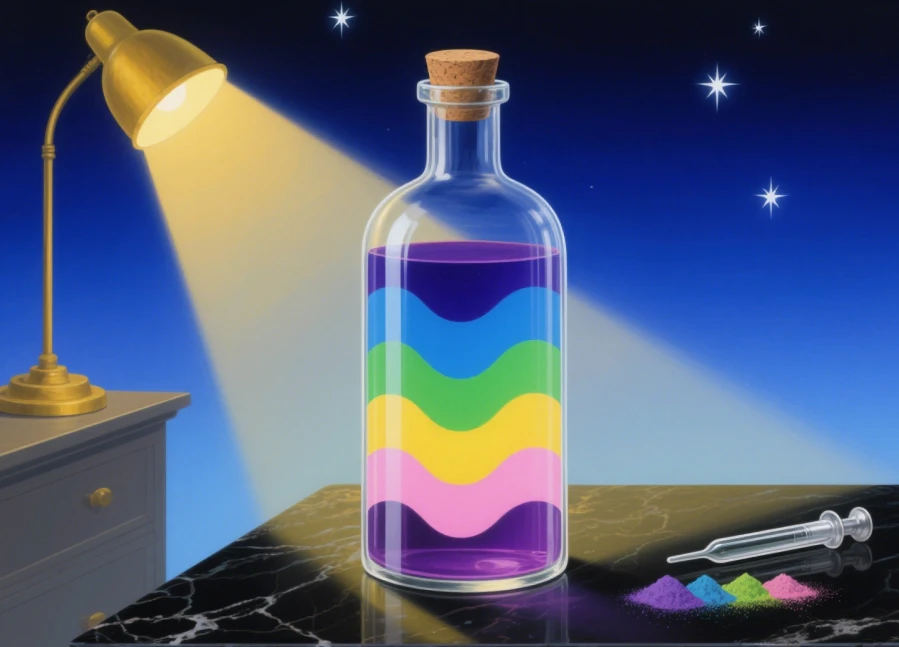
Creating a rainbow in a bottle is a fun science experiment that blends curiosity, learning, and creativity. It's often used in classrooms, at home with kids, or even in DIY science demonstrations. The project visually shows how liquids of different densities stack on top of each other to form colorful layers, resembling a rainbow.
Why Does It Work?
The rainbow effect is achieved by using liquids with different densities. Density is the measure of how heavy a substance is for its size. Heavier liquids naturally sink to the bottom, while lighter liquids float on top. By carefully layering these liquids, you can create a beautiful rainbow effect inside a transparent bottle or jar.
Materials You'll Need
To make a rainbow in a bottle, you don't need complex tools. Most items are available in the kitchen or can be found easily at a store:
A clear bottle or glass jar
Honey or corn syrup
Dish soap (colored works best)
Water (colored with food dye)
Vegetable oil
Rubbing alcohol (colored with food dye)
Food coloring in red, blue, green, and yellow.
Step-by-Step Instructions
1. Prepare Your Liquids
Color each liquid with a different food dye before pouring. For example:
Red for rubbing alcohol
Yellow for dish soap
Blue for water
Green for oil
2. Start with the Heaviest Liquid
Pour honey or corn syrup into the bottom of the bottle. This is the densest liquid, so it will stay at the bottom.
3. Add the Next Layer Slowly
Tilt the bottle slightly and pour dish soap gently over the syrup. The soap is lighter, so it will float on top without mixing too much.
4. Add Colored Water
Carefully pour the dyed water over the soap. Again, tilt the bottle and pour slowly to avoid mixing.
5. Add Oil
Next, pour vegetable oil. Since oil is lighter than water, it will form another layer on top.
6. Finish with Alcohol
Finally, pour the colored rubbing alcohol. This liquid is the lightest, so it will float on top, completing your rainbow in a bottle.
Safety Tips
Always supervise young children when using rubbing alcohol.
Pour slowly and carefully to avoid mixing the colors.
Use food-safe colors if you're doing this project with kids.
Applications in Learning
The rainbow in a bottle isn't just visually appealing-it's a great way to teach kids about:
Density and buoyancy
Properties of liquids
The importance of careful observation in experiments