

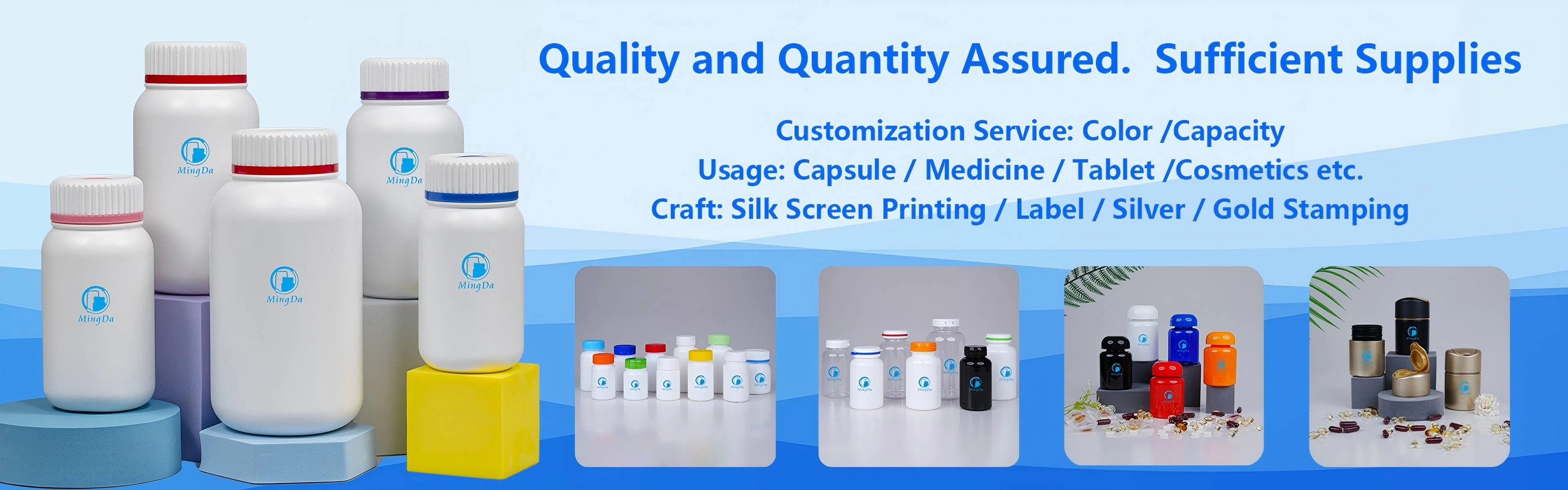
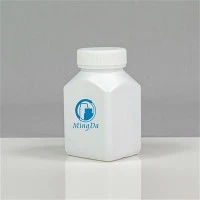
Introduction - why this matters
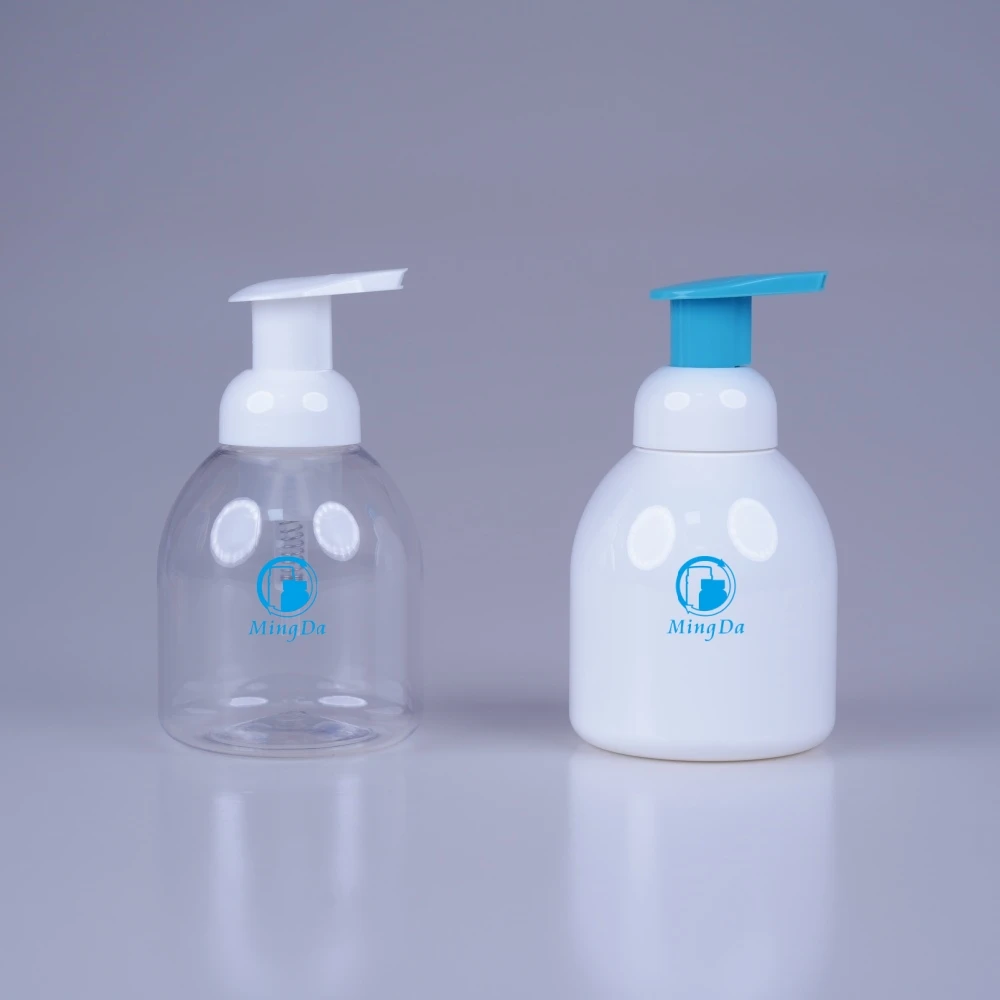
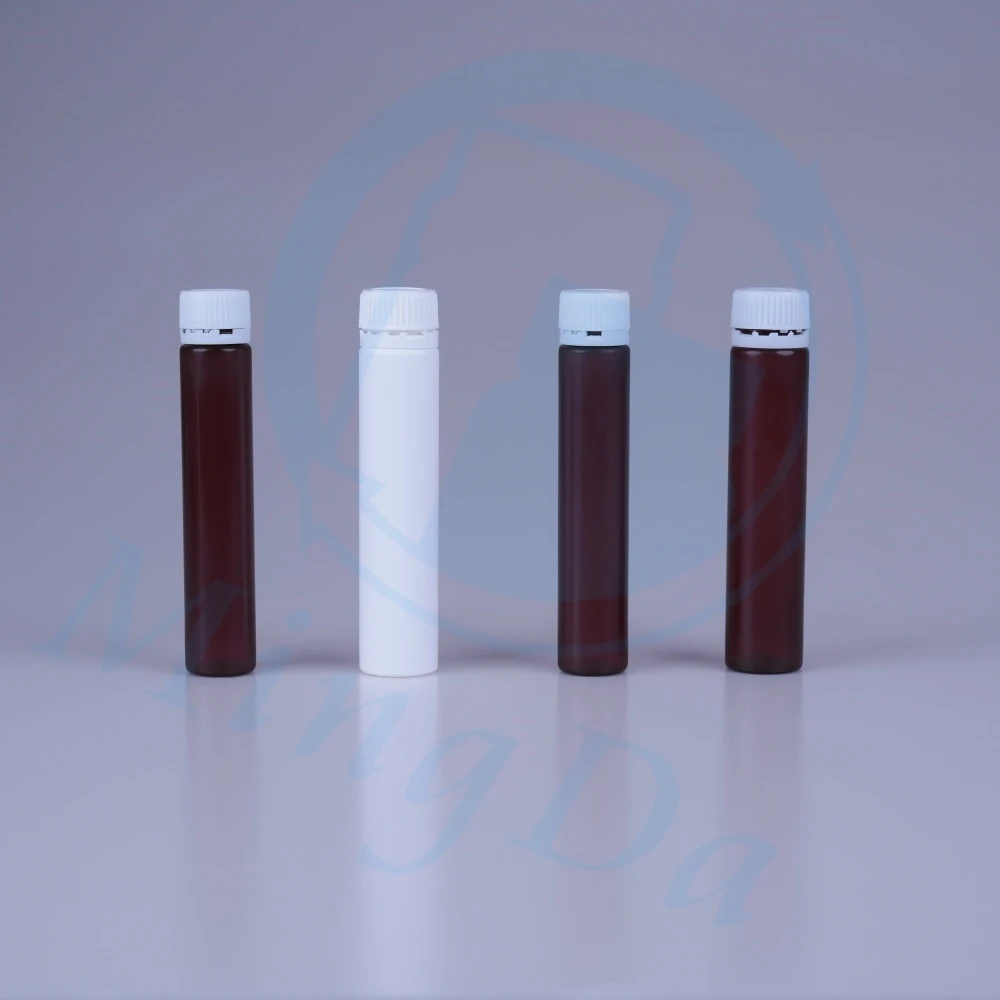
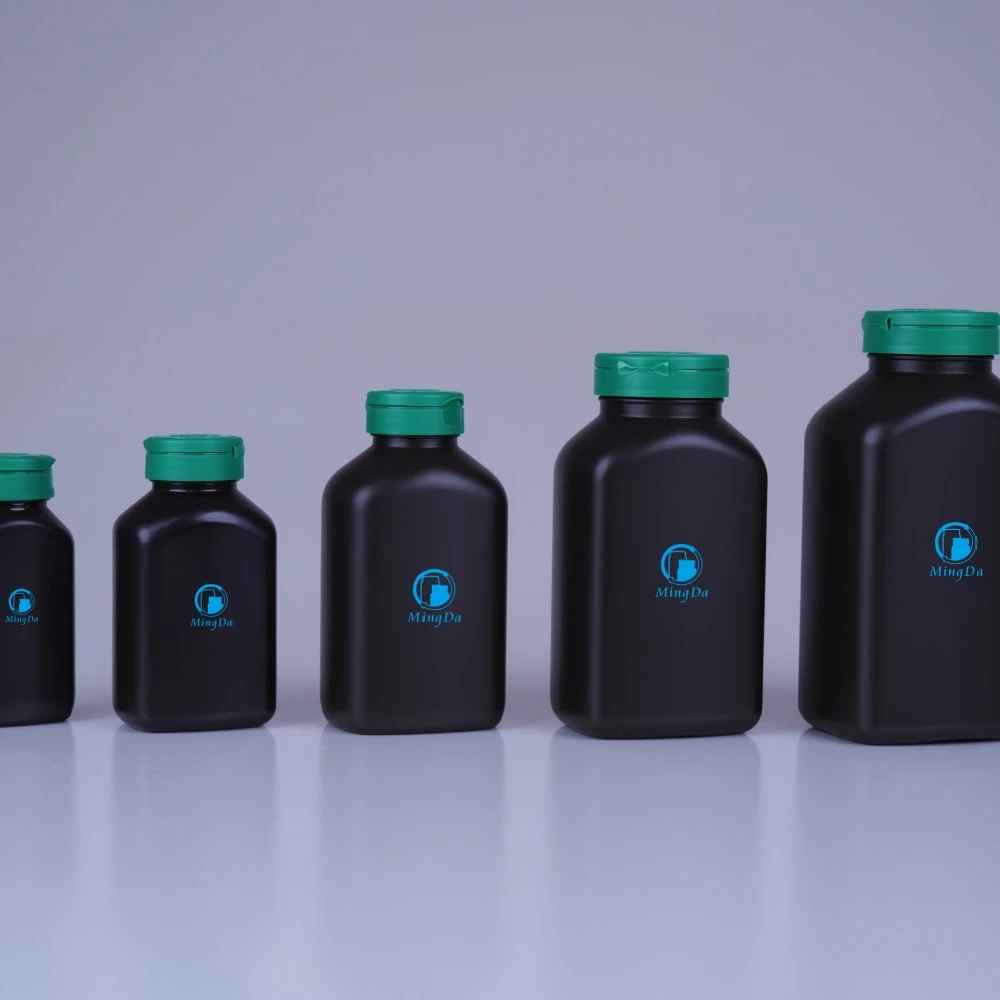
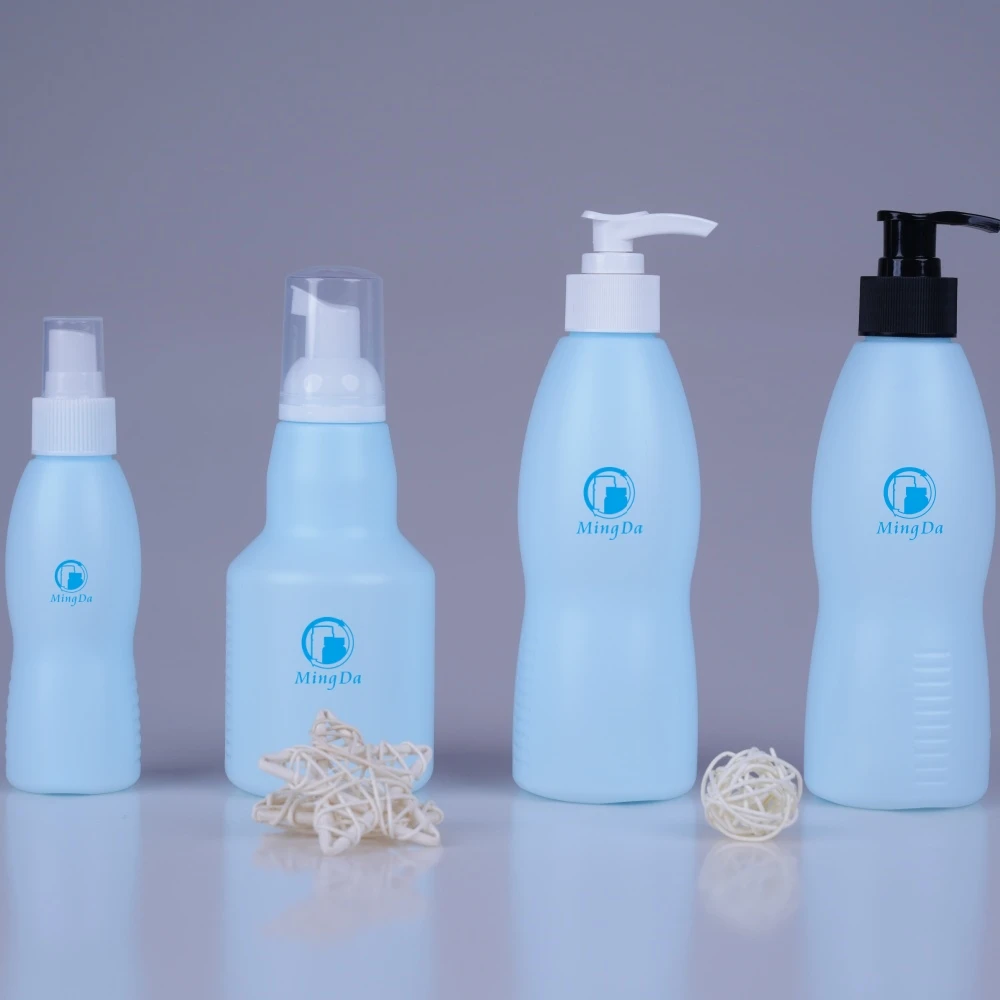
Choosing the right plastic jars affects product protection, user experience, shipping costs, and brand perception. I wrote this guide so you can make confident decisions when picking plastic jars for food, supplements, cosmetics, or household products. I focus on concrete, actionable criteria: product attributes, material, capacity, neck finish, lids, sealing, testing, cost, and supplier checks.
1) Start with the product attributes (the single most important step)
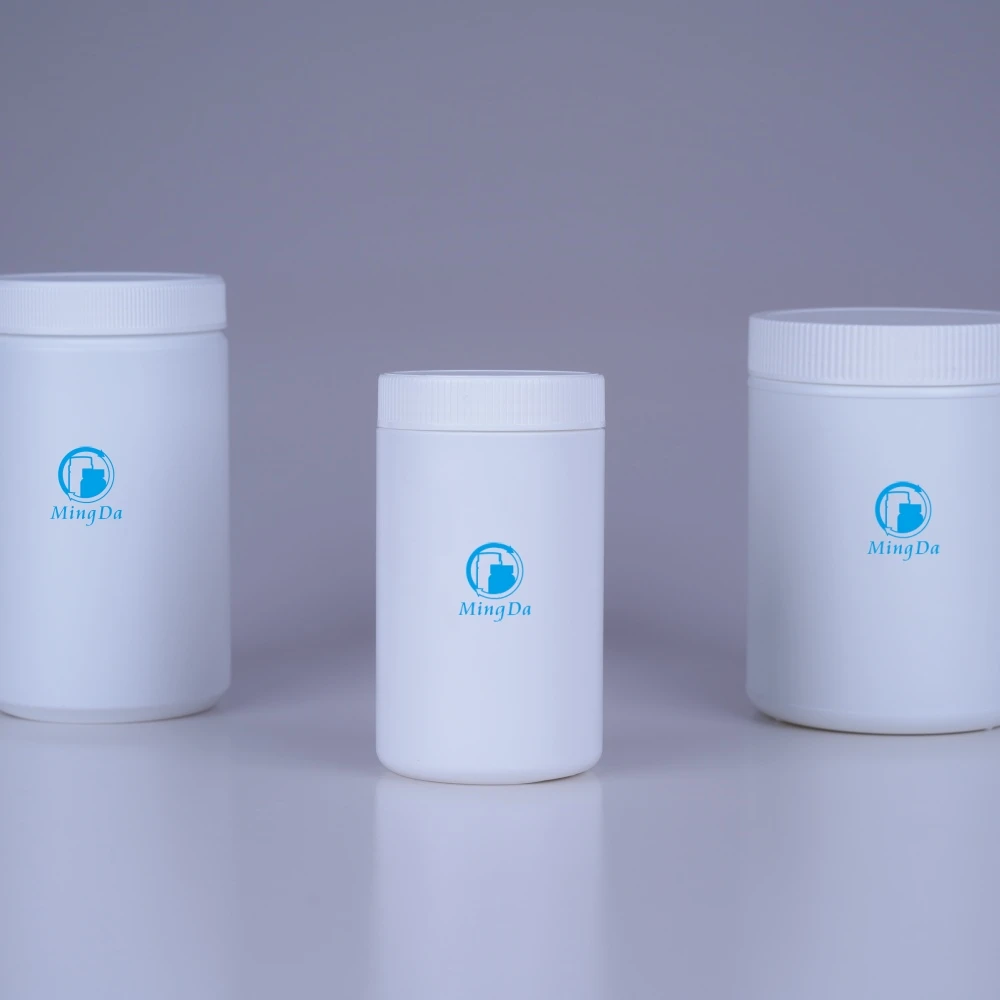
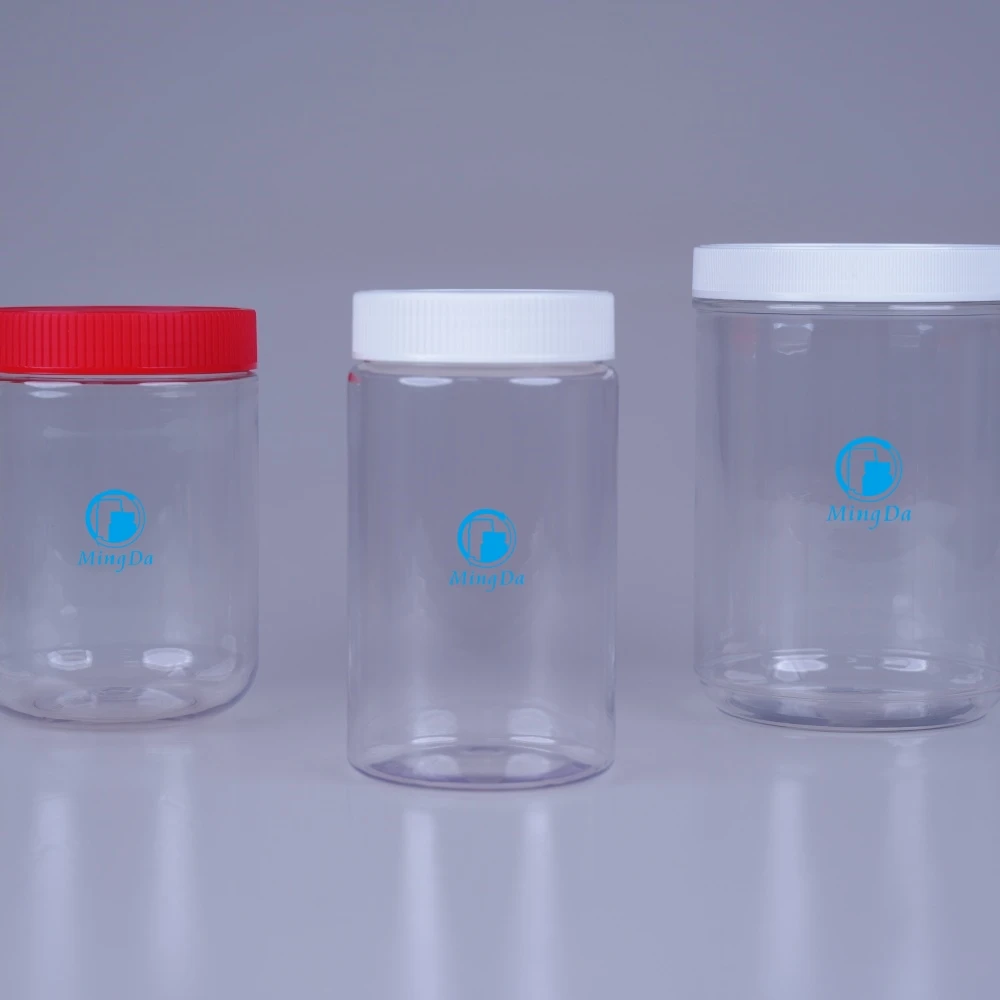
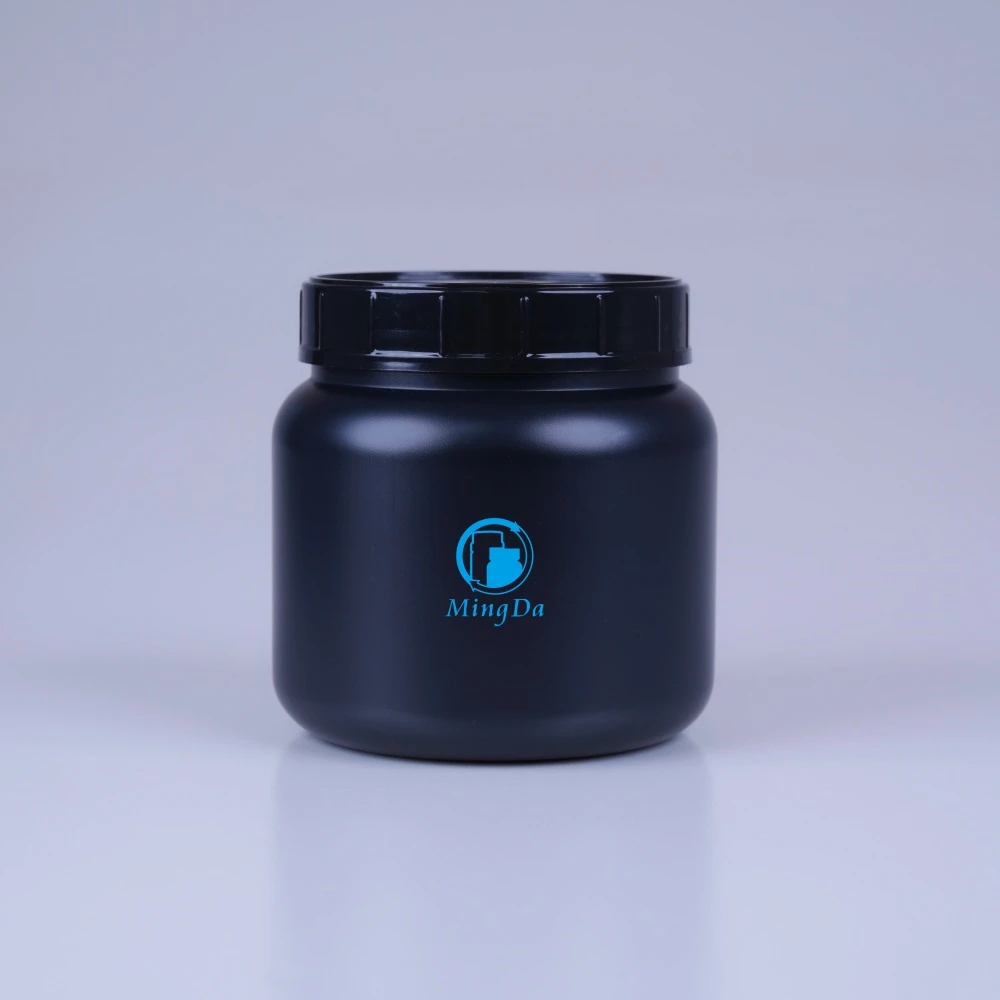
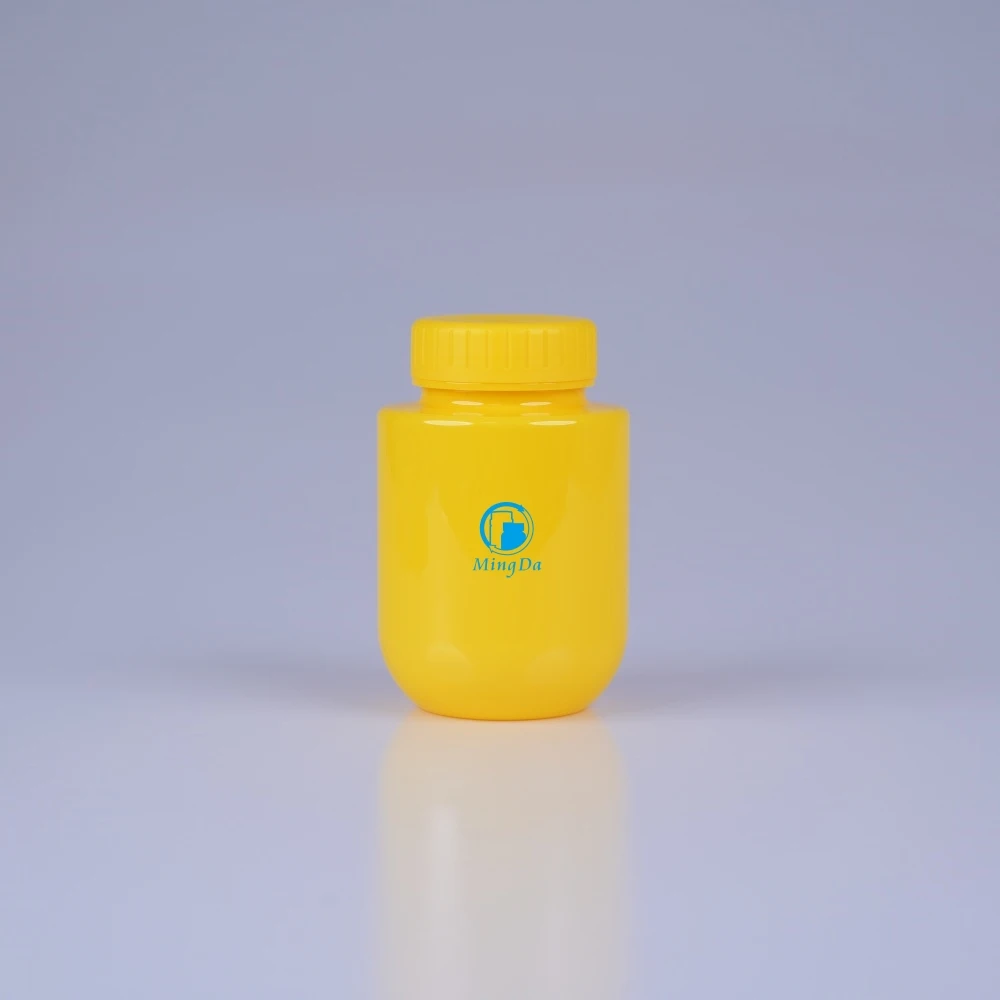
Begin by answering a few direct questions: is the product powder, liquid, paste, tablet, or soft chew? Does it need light protection or full transparency for display? Will customers scoop or pour it? Do you require food-grade certification, like FDA, or specific barrier properties? Those answers determine nearly everything else. For example, protein powder needs a wide mouth and strong impact resistance; syrups need a narrow neck and drip control.
2) Material choice: PET, HDPE, PP - how to decide


PET (Polyethylene Terephthalate): choose PET when you want high clarity, glossy finish, and good barrier to moisture/oxygen for short to medium shelf life. PET suits cosmetics, candies, and many food items where product visibility matters.
HDPE (High-Density Polyethylene): pick HDPE for impact resistance, chemical stability, and light-blocking options. HDPE works well for supplements, tablets, cleaning products, and bulk nutrition tubs.
PP (Polypropylene): Use PP for lightweight lids, heat resistance, and reusable containers. PP fits small containers, certain food trays, and closures.
Match material to chemical compatibility: acids, alcohols, oils can react differently-always verify with supplier material sheets.
3) Capacity, shape, and appearance - practical rules
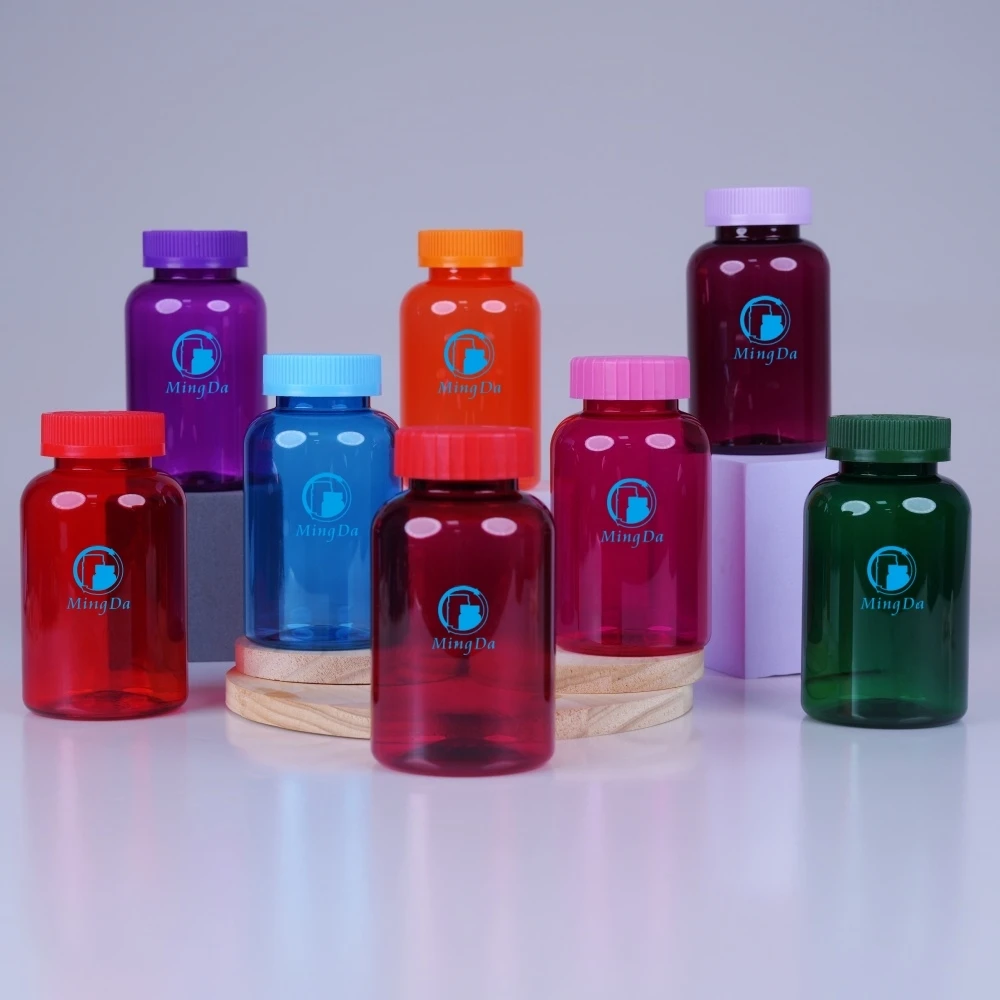
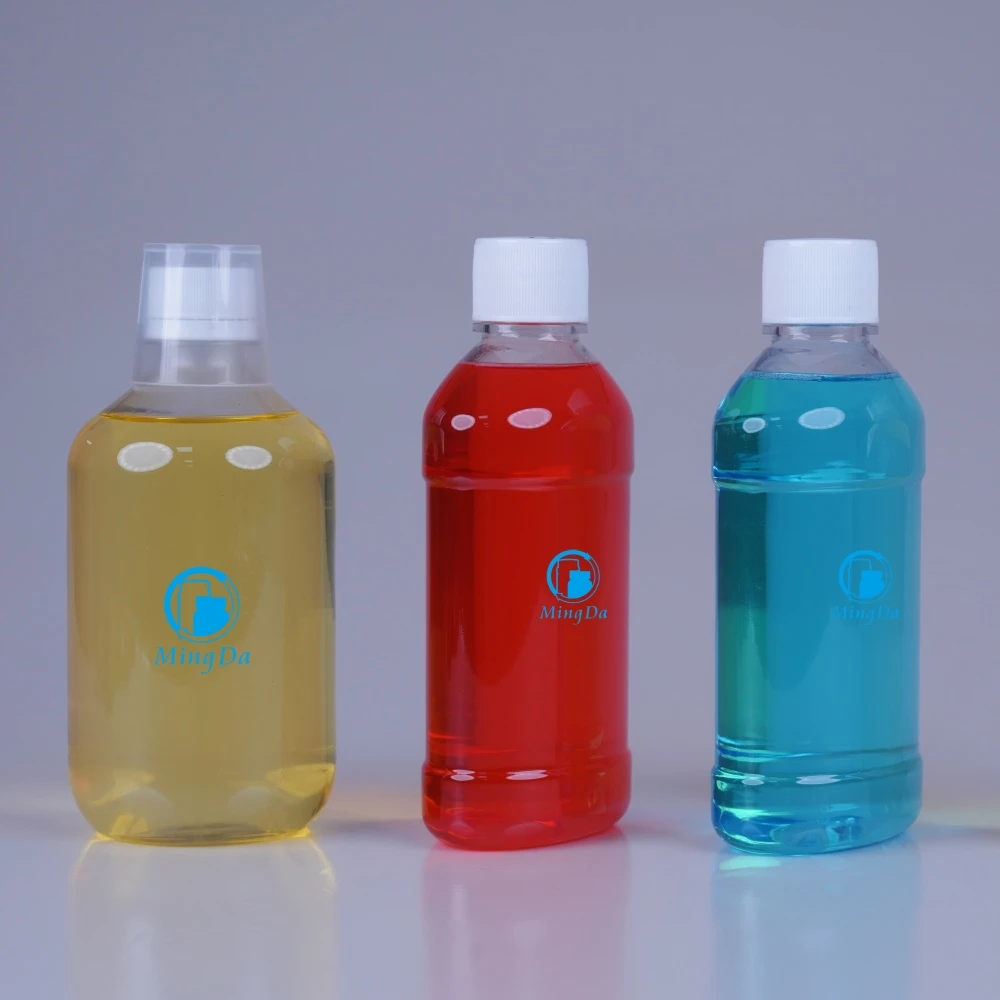
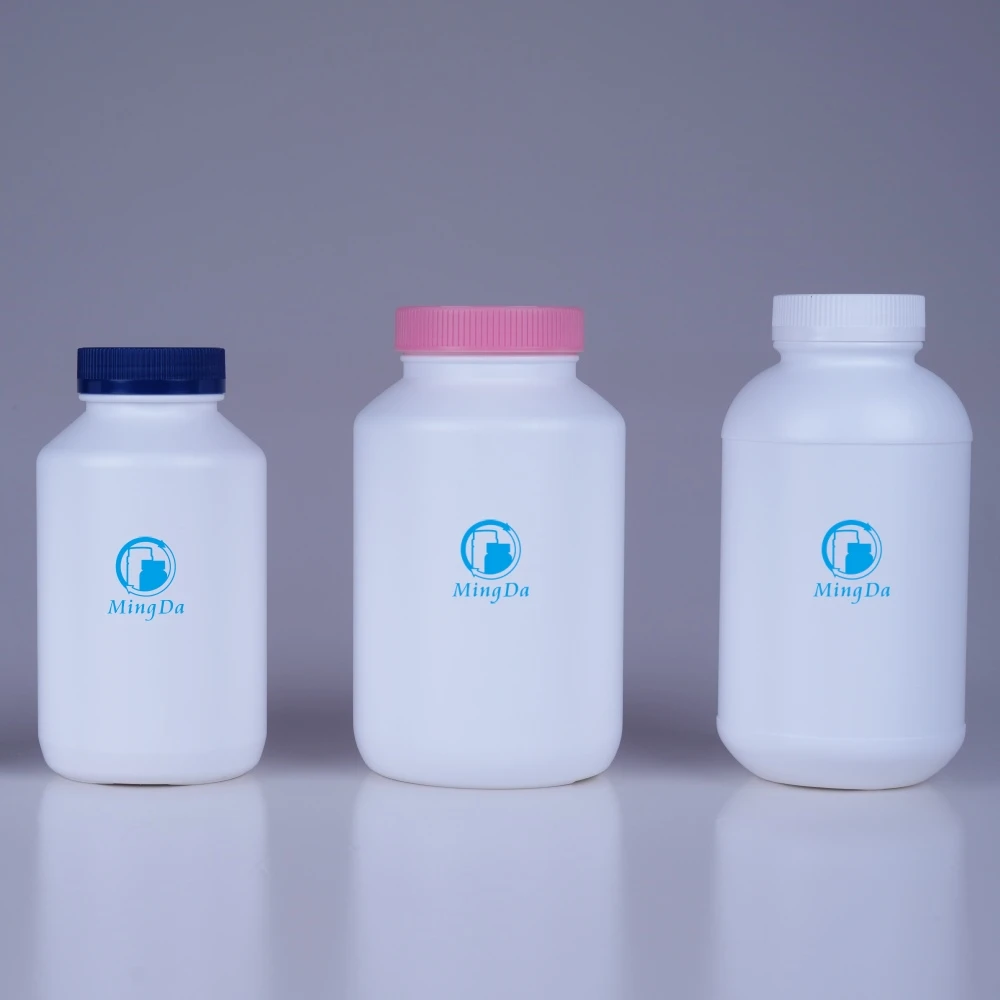

Capacity: size should reflect dosage/serving, shelf presence, and shipping cost. Common sizes: 100ml, 200ml, 300ml, 500ml, 1L. For powders, consider user ergonomics: too large a jar wastes shelf space; too small forces frequent reorders.
Shape: round jars maximize strength and are easy to mold; square or rectangular jars pack more efficiently on pallets; wide-mouth jars suit scooping; tall slim jars suit liquid dispensers.
Finish and decoration: choose from transparent, frosted (matte), opaque white, or amber (for light sensitivity). Add value with UV coating, silk-screen printing, hot-stamping or textured spray. Decorative finishes raise unit cost but also perceived value.
4) Neck finish and lid types - user experience and sealing


Neck size and lid style determine how users interact with the product and how well the jar seals. Common neck finishes include 38–400, 45–400, 53–400 (the first number refers to mm opening diameter; "400" is thread style). Match neck to product use and lid type.
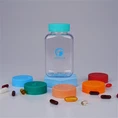
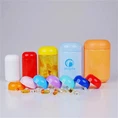
I will use the following practical lid examples (random selection of four common caps):
PP Safety Cap (child-resistant style) - ideal for pharmaceuticals and child-sensitive products.
LDPE Tear-Off Cap (tamper strip) - good for single-use freshness and tamper evidence.
PP Half-Flip Cap (flip-top with partial opening) - convenient for lotions and quick dispensing.
PP Matte Regular Cap (simple screw cap, matte finish) - economical and suitable for bulk uses.
Choose lids by priority: sealing, tamper evidence, dosing control, and user convenience. Test how easy customers find opening and reclosing; poor UX kills repeat purchase.
5) Sealing, tamper evidence and shelf life - what to demand from suppliers


Ask suppliers about sealing solutions: pressure-sensitive liners (e.g., PS-20 style), heat-seal aluminum foil, induction liners, and neck-seal adhesives. For products that must not leak, require torque and sealing tests.
Key factory tests I recommend verifying: sealing under vacuum (e.g., 27 kPa for a fixed time), drop test from 1.2 m with filled bottles, torque test for cap opening force, vibration simulation for transport, and cap-tightening force test.
Also check materials with infrared spectroscopy to confirm no harmful plasticizers or contaminants. These tests reduce returns and shipping claims.
6) Cost vs positioning - how to balance price and brand value


Set the packaging budget by brand positioning. If you sell premium skincare, invest in decorative caps, printing, and finish; these items justify higher retail prices. If you sell large-volume supplements, prioritize material durability, sealing, and cost per unit.
Remember that heavier or bulkier jars increase freight and storage costs. I always model landed cost per SKU: unit price + decoration + sealing + packaging for shipment + freight. That number guides final material and size decisions.
7) Supplier & quality checklist - what to verify before ordering
Before you place a bulk order, verify the supplier on these points:
- Certifications: ISO 9001, ISO 22000 (when food), FDA compliance, SGS test reports.
- Testing: can they provide recent sealing/test reports (vacuum, drop, torque, vibration, IR spectroscopy)?
- Customization: do they offer silk-screen, hot-stamping, UV coating, and embossing?
- Caps & liners: can they supply the exact cap styles and PS-20 or foil liners you need?
- Samples: request filled samples to simulate shipping.
- Capacity & lead time: factory daily capacity and real lead time for your order size.
- MOQ & price tiers: confirm price breaks for larger quantities.
I often recommend visiting the factory or hiring a third-party inspector for critical orders. If you prefer a supplier reference, consider established packaging manufacturers with documented certifications and lab testing capability.
8) Practical checklist - a one-page decision guide you can use now
Use this simple checklist before you commit:
- Product type: powder/liquid/tablet/cream?
- Required protection: light/oxygen/moisture/none?
- Material choice: PET / HDPE / PP - confirmed via compatibility sheet?
- Capacity & mouth size: matches dosing and ergonomics?
- Lid selection: sealing, tamper evidence, dosing control?
- Test reports: sealing (vacuum), drop (1.2 m), torque, vibration, IR?
- Decoration: silk-screen, UV, hot stamp - budgeted?
- Supplier: certifications, sample availability, MOQ, lead time?
- Landed cost modeled? Yes / No.
- Order sample run and ship test passed? Yes / No.
I follow this checklist for every new SKU; it prevents the common mistakes that cost time and money.
9) Real-world examples & recommendations (brief)


Protein powder: choose HDPE, wide-mouth (e.g., 89–400 or similar large opening), PP matte screw cap with induction or foil seal. Prioritize drop and vibration tests.
Vitamin capsules/tablets: HDPE or opaque PET, 45–400 neck, PP safety cap if child safety needed, include PS-20 liner for freshness.
Creams & cosmetics: PET jar for clarity or frosted PET for premium feel, choose PP half-flip or decorative cap, add silk-screen and UV coating for brand differentiation.
Food condiments (honey, spices): PET or food-grade HDPE depending on light sensitivity, airtight liner and tamper strip recommended.
When I source packaging, I always request filled samples and run a short transport simulation (vibration + a few random drops) before full production.
Conclusion - final decision roadmap & next steps
To choose the right plastic jar, follow this route: define product needs → pick material → choose capacity and mouth → pick lid and sealing solution → verify tests and certifications → model landed cost → order filled samples and run transport tests → confirm mass production. I keep a one-page checklist and I urge you to do the same before scaling. If you want, I can help you convert this checklist into a printable QC sheet or prepare sample request emails to suppliers.