

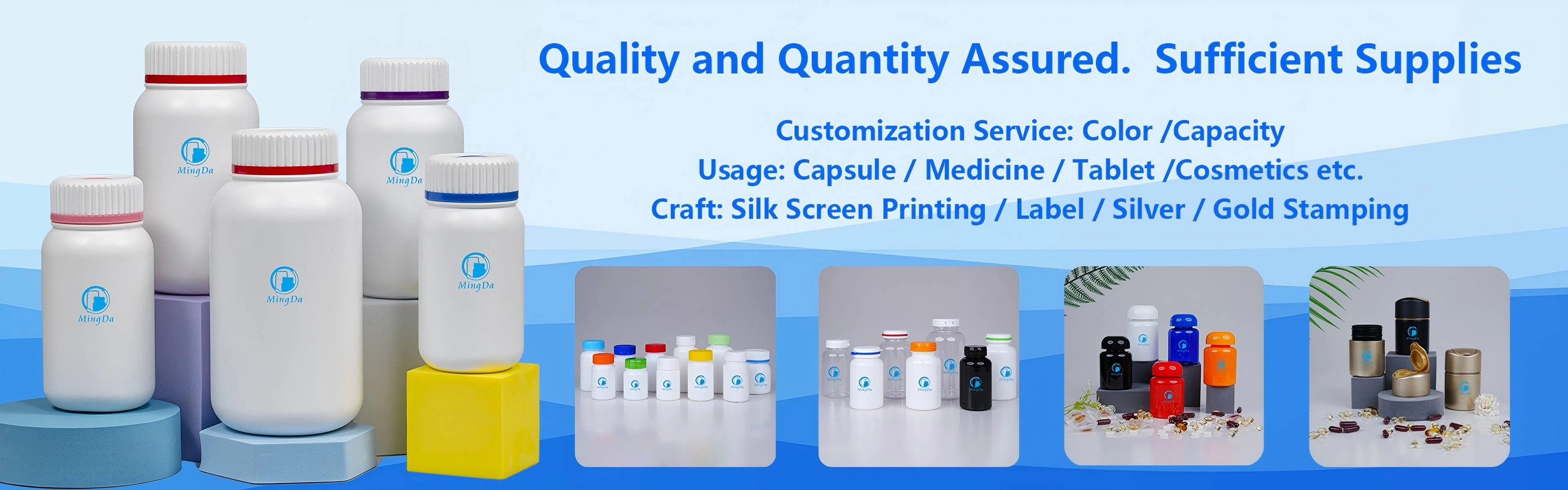

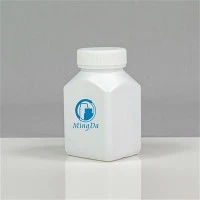
Two materials commonly used in experiments: HDPE and PP. We will teach you how to correctly choose bottles made of these two materials by comparing the characteristics of the two materials.
1. Bottle mouth size
Reagent bottles are divided into wide-mouth bottles and small-mouth bottles. Wide-mouth bottles have larger mouths and are mainly used to store solid reagents. Large-diameter bottles are easy to take.
Small-mouth bottles have smaller mouths and are mainly used to store liquid reagents. It should be noted that the liquid in the small-mouth bottle is easily contaminated, so be extra careful when taking the liquid.
2. Tolerant temperature
Due to the different molecular structures (HDPE has no side chains, PP has side chain methyls), the brittleness temperature (Brittleness) of the two materials is different. Temp.) is very different. The brittle temperature of HDPE is -100℃, and the brittle temperature of PP is 0℃. Therefore, when the product needs to be stored at low temperature, more HDPE material bottles are selected, such as the 2-8℃ buffer and -20℃ enzyme bottles used to store diagnostic reagents; for products that need to be used at high temperatures (such as 121℃ high temperature and high pressure sterilization), PP materials should be selected. The maximum operating temperature of HDPE material is usually 120℃, while the maximum operating temperature of PP material is 135℃.
3. Chemical corrosion resistance
At room temperature, both HDPE and PP material bottles can resist acid and alkali, but HDPE material is superior to PP in terms of oxidation resistance. Therefore, when storing oxidizing materials, HDPE material bottles should be selected; low molecular weight aliphatic hydrocarbons, aromatic hydrocarbons and chlorinated hydrocarbons can soften polypropylene and Swelling, so when storing organic solvents such as benzene rings, n-hexane and chlorinated hydrocarbons, plastic reagent bottles made of HDPE should be used.
4. Color transparency
Due to the influence of molecular structure, PP is more transparent than HDPE in terms of transparency, which is more conducive to observing the state of the materials stored in the bottle (PP material is slightly superior to HDPE material).
The color of the reagent bottle is generally transparent or brown. Brown bottles are used to store chemical reagents that are easily decomposed by light, such as nitric acid, silver nitrate, silver hydroxide, chlorine water, etc. Transparent bottles are used to store general chemical reagents.
5. Sterilization method
The only difference between HDPE and PP in sterilization method is that PP can be sterilized at high temperature and high pressure, while HDPE cannot. Both can be sterilized by EO, irradiation (radiation-resistant PP is required, otherwise it will turn yellow) and disinfectant sterilization.
6. Gas (N₂, O₂, CO₂) barrier properties
HDPE material is superior to PP in all aspects. The barrier properties of N₂ and O₂ are not much different, but in terms of CO₂ barrier properties, HDPE material is obviously superior to PP material. Therefore, if the product is sensitive to oxygen and carbon dioxide, it is recommended to choose a reagent bottle made of HDPE material