

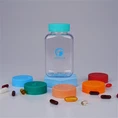
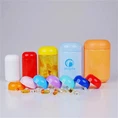

The color of plastic bottles has an impact on their performance to a certain extent. The following is an analysis from several aspects:
Barrier performance
UV blocking: Plastic bottles of different colors have different UV blocking capabilities. For example, dark-colored (such as brown, black) plastic bottles usually block UV rays better than light-colored (such as transparent, white) plastic bottles. This is very important for the storage of some light-sensitive substances, such as medicines, cosmetics, and cooking oils. It can reduce the photochemical reaction caused by ultraviolet rays, delay product deterioration, and maintain stable product performance.
Gas and water vapor barrier: The color itself has no direct essential effect on the gas and water vapor barrier performance, but the formation of color may be related to the added pigments or additives. Certain pigments or additives may affect the molecular structure and density of plastic bottles, thereby indirectly affecting their gas and water vapor barrier performance.
Mechanical properties
Heat resistance: Generally speaking, darker plastic bottles absorb heat more obviously than light-colored plastic bottles. In high-temperature environments, they may absorb more heat, causing the temperature of the bottle to rise faster, which may cause the mechanical properties of the plastic material to decline more significantly, such as being more prone to deformation.
Impact resistance: The color may be related to the formula and production process of the plastic bottle. Some special-colored plastic bottles may need to add specific additives or use special processes during the production process. These factors may affect the internal structure of the plastic bottle and thus its impact resistance. For example, the arrangement of the molecular chains of plastic bottles with certain dark pigments may be affected to a certain extent. When impacted, the intermolecular forces may change, resulting in different impact resistance.
Optical properties
Transparency: Transparent plastic bottles allow users to directly see the contents of the bottle, making it convenient to check the status and balance of the product, but transparent plastic bottles have relatively weak blocking capabilities against ultraviolet rays and other light. Although colored plastic bottles can block light better, the internal situation cannot be directly observed.
Glossiness: Plastic bottles of different colors may also have differences in glossiness. Glossiness not only affects the appearance and texture of plastic bottles, but may also be related to the microstructure of the plastic surface. Some high-gloss colors may mean that the surface of the plastic bottle is smoother and flatter, which may reflect the processing technology and quality of the plastic bottle to a certain extent, but this is not absolute, because by adding different additives and using different surface treatment processes, even plastic bottles of the same color may have different glossiness.
Aging performance
Weather resistance: In outdoor environments, color has a significant effect on the weather resistance of plastic bottles. Dark plastic bottles are more likely to absorb heat from the sun, and under the combined action of ultraviolet rays and heat, the aging process of plastics may be accelerated, manifested as brittleness, discoloration, cracking, etc. Light-colored plastic bottles absorb relatively less heat and may age more slowly.
Chemical stability: Certain components in the color may react with substances in the plastic bottle or chemicals in the external environment under specific chemical environments, thereby affecting the chemical stability of the plastic bottle. For example, some pigments containing metal ions may trigger catalytic reactions when exposed to certain chemicals, accelerating the degradation or deterioration of plastics.
Does the color of the plastic bottle affect its performance?
Feb 21, 2025 Leave a message
Send Inquiry