


Alcohol and Oil Resistance of Different Plastic Materials
The resistance of plastic bottles to alcohol and oils mainly depends on the raw materials used. Below is a brief overview of several common materials:
1. HDPE (High-Density Polyethylene)
- Excellent resistance to most alcohol concentrations;
- Chemically stable against plant oils, mineral oils, and other oily substances;
- Highly resistant to swelling or deformation;
- Widely used for packaging pharmaceuticals, health supplements, disinfectants, and oil-based products.
2. PET (Polyethylene Terephthalate)
- Good resistance to low-concentration alcohol and most plant oils;
- High transparency and attractive appearance, commonly used in beverages and food.
- However, under prolonged exposure to high-temperature or high-concentration alcohol (>70%), PET may exhibit micro-swelling or brittleness.
3. PP (Polypropylene) Caps and Liners
- Excellent alcohol and oil resistance, ideal for use with HDPE or PET bottles;
- Pressure-sensitive liners or heat-seal aluminum foils can be added for improved sealing performance.
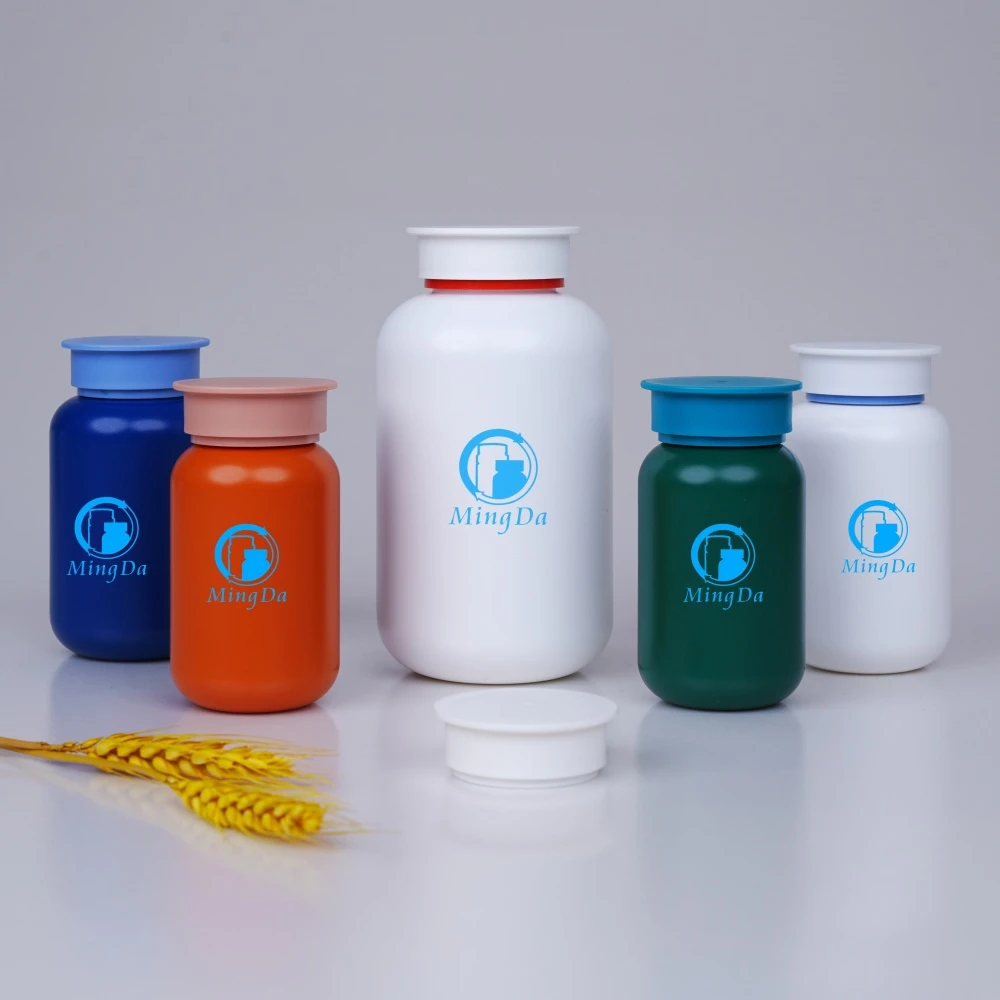
Mingda's Solutions and Material Recommendations
As a professional plastic packaging manufacturer, Mingda provides customized material selection and testing services based on the type of liquid to ensure packaging stability and safety in real-world applications:
Alcohol-based products (e.g., disinfectants, alcohol swabs, perfumes):
Recommended configuration: HDPE bottle + PP cap + pressure-sensitive liner.
High-fat products (e.g., cod liver oil, essential oils, skincare oils):
Recommended configuration: HDPE bottles or multilayer composite bottles to enhance barrier properties.