



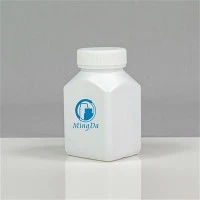
Small ventilation holes are added to the aluminum foil to allow limited passage of certain gas molecules, enhancing the stability and adaptability of the packaging while maintaining most of the barrier performance.

✅ Advantages
1. Ventilation Function to Prevent Swelling and Deformation
The micro ventilation holes allow limited release of small molecules such as air and water vapor, effectively preventing internal pressure buildup caused by fermentation, thermal expansion, or contraction. This helps avoid swelling or deformation of the bottle or pouch, maintaining a stable appearance. It is particularly suitable for active products that generate gas, such as spirulina tablets or probiotics.
2. Maintains Effective Barrier Properties
Despite being breathable, the aluminum layer still provides excellent protection against liquids, oils, light, oxygen, and microorganisms (e.g., bacteria, mold). This slows down oxidation and spoilage, making it ideal for moisture-sensitive or shelf-life-critical foods and pharmaceuticals.
3. Reduces the Risk of Deformation During Transportation
During storage and logistics, the breathable design helps balance the pressure inside and outside the packaging. It reduces the risk of bulging or collapsing caused by altitude changes or temperature fluctuations, such as during air transport.
4. Enables Lightweight Packaging Design
As the packaging no longer relies on full vacuum sealing or inflated protection, breathable foil allows for a reduction in material thickness and usage. This lowers packaging costs and resource consumption, supporting more sustainable packaging solutions.
⚠️ Limitations
1. Potential Risk of Microbial Contamination
While allowing gas exchange, the ventilation holes may also serve as entry points for microorganisms such as bacteria or mold. If the pore size is too large or hygiene is not well controlled, contamination may occur. Therefore, it is not suitable for high-humidity or easily perishable products.
2. Limited Control Over Gas Permeation
The breathable structure cannot fully block the slow diffusion of oxygen, odors, or other gases. For products that demand extremely high sealing performance-such as high-fat foods or long-term pharmaceutical storage-this may shorten the shelf life and require supplemental barrier materials.
3. Not Suitable for Liquids or Fine Powders
Liquid or finely powdered contents may leak through the ventilation holes, causing contamination or seal failure. Such products require inner sealing films or multi-layer structures, increasing packaging complexity and cost.
📌 Application Recommendations
Evaluate whether breathable foil is appropriate based on product characteristics, especially moisture activity, oxygen sensitivity, and shelf-life expectations.
For applications requiring both breathability and high barrier performance, consider using one-way breathable membranes or multi-layer composite films with controlled permeability.
For liquids or powder-based contents, it is recommended to conduct seal integrity tests on samples to assess the risk of leakage before final implementation.